
17
It’s an unfortunate reality in Africa’s food systems when harvest comes in and yet, the food doesn’t reach the people who need it, in the form that would nourish or profit them.
What then changes in the next two decades? The World Economic Forum gave an answer and noted that Africa’s next 20 years will be shaped by how well the continent connects food system innovation, technology adoption and the energy of its young population.
That framing is worth sitting with, because the next two decades won’t be won by growing more food alone, but by what happens to that food after it leaves the farm.
Why Africa Must Innovate Its Food Processing Sector
Food processing is at the centre of Africa’s economic growth, its food security and sustainable development. And of course, the continent has not fully caught up. Africa is still losing a great deal of food yearly to post-harvest losses, limited infrastructure and inadequate access to modern technologies. Just as the World Economic Forum position, Africa’s future over the next twenty years depends directly on combining youth energy, modern technology, and food system improvements.
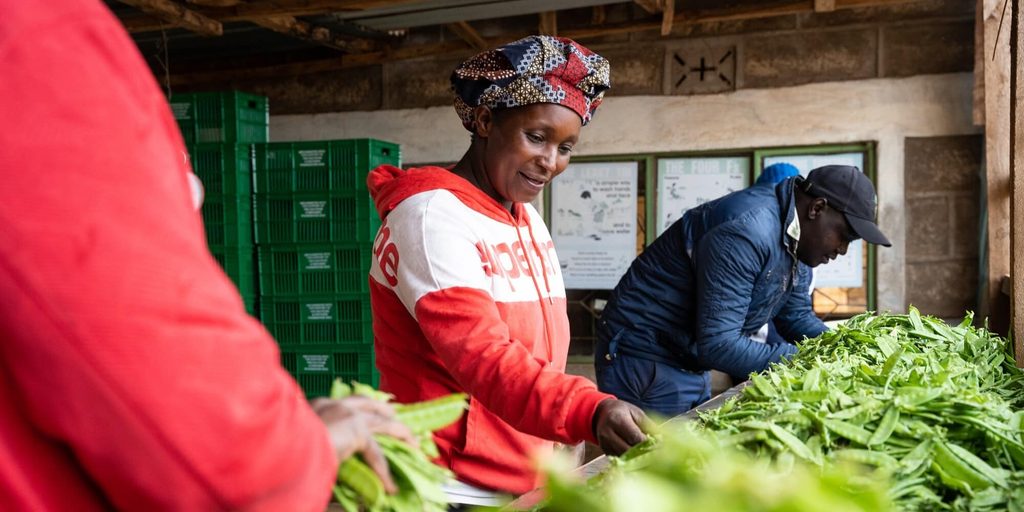
Harnessing innovation in this sector has become urgent rather than optional. Globally, a third of what’s harvested never makes it to a plate, it is lost somewhere between the farm and the market, long before it has a chance to feed anyone or earn anyone a living. That loss is exactly where processing innovation has the most to offer.
However, not everyone agrees on where the emphasis should fall, though. Some development economists argue that processing infrastructure means little without matching investment in rural roads and power. Of what use is a well-equipped processing plant sitting an hour from the nearest all-season road, if it solves very little for the farmers it was meant to serve?
We are excited to share with you
This FREE E-Book of 50 Agritech Pioneers & Their Game Changing Innovations.
Download the Ebook now
Others in the smallholder advocacy space push back even further, warning that a heavy focus on large-scale processing facilities can quietly sideline the small, informal processors, many of them women, who already move a significant share of Africa’s food from farm to table without any of the fanfare.
Both critiques are worth exploring, and any honest conversation about innovation in this sector has to hold them alongside the case for scale.
The Roundtable That Was Much Needed
That shared action, and the different views surrounding it, found a stage in January 2025. The Scientific Roundtable on Advancing Food Processing in Africa was jointly organized by the International Union of Food Science and Technology (IUFoST) and the Association of African Universities (AAU), and it convened a diverse group of experts, researchers, policymakers and participants from around the world.
Held on January 21 2025, the webinar explored strategies for scaling up food processing technologies across the continent, while staying grounded in the realities that make scaling difficult in the first place.
Scaling Up Traditional Food Processing Technologies
The roundtable opened with something easy to overlook, which is that traditional food processing carries deep cultural and economic significance and isn’t a relic waiting to be replaced. It’s an integral part of African heritage, and it sustains local economies in ways formal industry hasn’t matched, even now.
But the barriers to efficiency can’t be ignored. Many traditional methods rely on manual labour and localized equipment, which leads to inconsistent product quality. This limited mechanization makes large-scale production difficult on top of that. Many traditional foods and processing techniques also struggle to meet regulatory and health standards, which keeps them locked out of formal markets no matter how good the product itself might be.
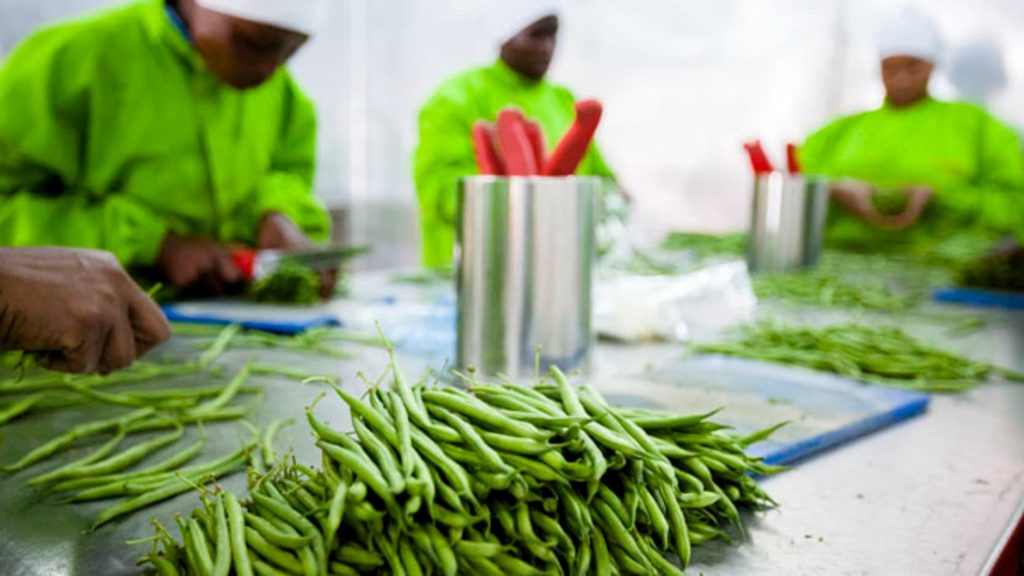
Scaling these technologies up would change that picture, but getting there starts with investment in research and development, followed by capacity building through training programmes for small-scale processors. Public-private partnerships can attract investment and secure market access that neither side could manage alone, while government support through policy, tax incentives and grants provides the framework that holds it all together. Collaboration between research institutions and processors matters just as much, since new technology tends to stall the moment it leaves the lab without someone on the ground to carry it further.
Some of this is already happening but needs to be scaled at large. An example is mechanized cassava processing in Nigeria which has produced high-quality cassava flour at scale. Also, Ethiopia’s fermented dairy products have expanded into markets beyond Africa, and solar and hybrid dryers have improved drying and dehydration methods across several regions. Standardized fermentation technologies are now helping ensure product consistency and safety too, which matters as much for trust as it does for shelf life.
Does Processed Mean Unhealthy? Absolutely Not
There’s a quiet assumption in every conversation about food processing, that processed automatically means less healthy. It doesn’t hold up. Traditional African fermentation actually improves nutritional quality by increasing the digestibility of the foods it transforms. Processing done right isn’t the enemy of nutrition, it’s often what makes food safer and easier for a household to access, especially where fresh produce spoils long before it reaches a plate.
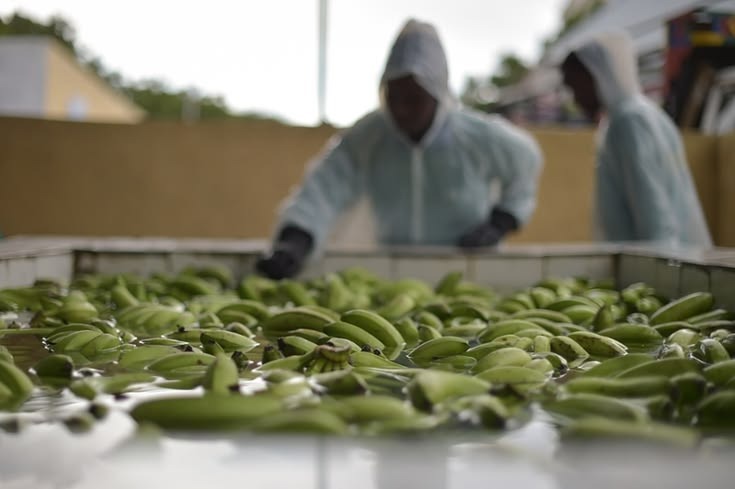
That said, the caution isn’t entirely misplaced either. Ultra-processed foods have made real inroads into African diets over the past decade, often crowding out more nutritious, minimally processed alternatives simply because they’re cheaper and easier to distribute. So the conversation that holds up is which processing methods serve people and which ones don’t, and that distinction deserves more attention than it usually gets in either direction of the debate.
The Importance of Food Innovation Hubs
Getting these technologies from research bench to rural kitchen requires infrastructure of its own, and the roundtable proposed establishing technological incubation centres in rural areas to enhance knowledge transfer. In essence, it puts innovation physically closer to the people who use it.
Universities have a role here too, especially in modifying curricula to incorporate entrepreneurship training, which would empower young graduates, even those outside food science disciplines. Short-term micro-credential courses were suggested as a faster way to equip interested graduates with the specific skills they’d need to get started, since a four-year degree cycle moves far slower than the problem it’s meant to solve.
Africa’s Food Processing Sector Needs Scale, Not Reinvention
The continent of Africa doesn’t need to invent new ways to process food. Many of the technologies and processing methods needed to turn local crops into safe, affordable and higher value products already exist. The bigger challenge is making these technologies accessible to processors through reliable power, suitable equipment, finance and technical capacity.
The opportunity is to adapt proven processing solutions to local crops, markets and production volumes. With the right systems in place, more of what Africa grows can be processed closer to where it is produced. In turn, this creates more value from each harvest and reduces the losses that occur before food reaches consumers.