
Livi, the first US FDA-cleared device designed to absorb semen and vaginal discharge after intercourse, is now available nationwide. The doctor-designed solution was made to address a “common yet rarely discussed” aspect of intimate health, managing post-sex fluids that can contribute to lingering discharge and odor, including those associated with temporary pH changes.
LiviWell says it is introducing a new category of science-backed post-sex care designed to help people take control of their vaginal health.
“For far too long, women have been expected to simply accept common post-sex symptoms like odor and discharge,” says Dawn Halkuff, CEO of LiviWell. “Bringing these everyday realities into the conversation is an important part of advancing women’s intimate health.”
The company was founded by former Pfizer innovation executive Dan Seewald and board-certified urogynecologist Dr. Michael Ingber. It touts combining decades of health care and clinical expertise.
Ingber says he saw the need for Livi firsthand in clinical practice. “Women have long shared frustrations around post-sex leakage and discomfort, yet there has never been a product specifically designed to address it. Livi offers a simple, discreet option that fits naturally into a woman’s post-intimacy routine.”
Inside Livi
LiviWell’s progress has been backed by anchor investor Atlantic Health, supplying financial and research resources. The company says the support has enabled it to advance through critical development milestones and regulatory submission. The after-sex absorption device is the first of its kind cleared by the FDA.
Livi is said to address a long-overlooked need in post-sex intimate health.
“Meaningful innovation starts with listening. Conversations with women revealed a clear need for a medical solution designed specifically for post-sex care, and we’re incredibly excited to finally make Livi available nationwide,” says Seewald.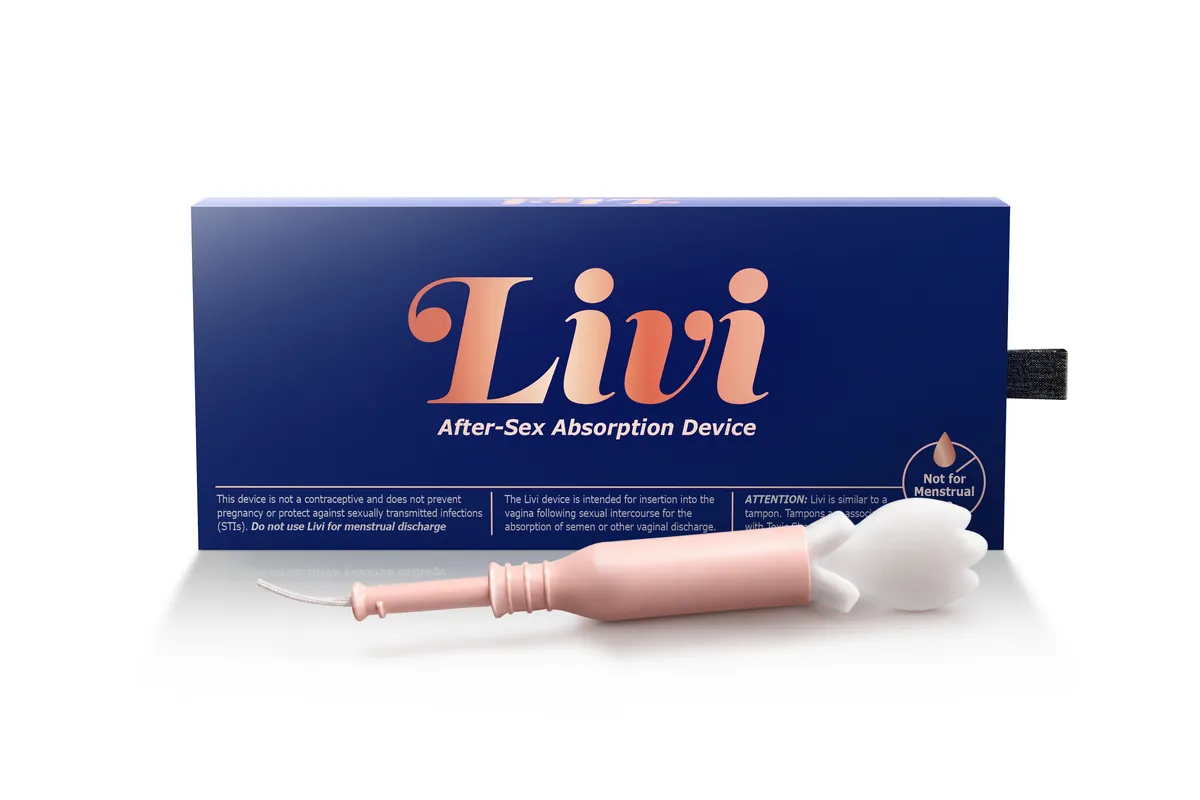 Seewald credits conversations with women for shaping Livi’s design.
LiviWell reports that while there are many products focused on the vaginal microbiome and improving vaginal health, few address semen disrupting the organ’s naturally acidic pH levels.
When pH levels are imbalanced, it can negatively impact the vaginal microbiome, the microscopic environment of good bacteria that keeps the vagina healthy. Livi works to absorb semen and remove the potential for disruption. According to the company, over 30% of people with vaginas have an imbalanced vaginal microbiome.
In LiviWell’s product testing, it found that 98% of users noted improvement in discharge, 84.3% reported improvement in post-coital vaginal odor, and 92.8% stated they would use the product again. Additionally, 63% reported less worry or anxiety about sex, and 68% said sexual frequency would likely increase.
Livi is made from polyurethane absorptive foam and is inserted vaginally using a tampon-style applicator to absorb semen and other vaginal discharge after intercourse. The product has a tulip-shaped tip and is intended for single use. It is exclusively available at LiviWell’s website for US$13.99.
Sexual wellness goes mainstream
Intimate care solutions, especially those involving sexual wellness, have received increased attention, as consumers are breaking down traditional taboos and asking for transparency.
Similar to Livi’s FDA clearance, at the end of last year, the US FDA approved Addyi, a pill that boosts female libido, for women postmenopause. Addyi (flibanserin 100 mg) became “the first and only” FDA-approved pill clinically proven to treat low sex drive in women.
Earlier this year, Jessica Drake, director of marketing and product development at Wicked Sensual Care, told Personal Care Insights that people are starting to view sexual wellness as part of overall personal care instead of something separate or shameful.  Sexual wellness is moving from the perimeter into mainstream personal care.
“Lubes, sensual massage oils, intimate skin care, and arousal products are becoming part of people’s daily rituals in the same way skin care, body care, wellness products, and supplements already are,” she said.
In another interview, Kathryn Pratt, SVP of marketing and innovation at Beacon Wellness Brands, echoed Drake’s point of sexual health — which has long stood on the perimeter of personal care — now coming to the forefront. However, she pointed out that the intimate care sector has expanded rapidly, and “credible education and inclusive dialogue haven’t kept pace with consumer interest.”
That discrepancy is causing consumers to turn to indie intimate wellness brands whose messaging more closely aligns with their desire for transparency. Jazmyn Williams, VP of Brand at Honey Pot, previously told us that legacy products aren’t serving modern needs.
In a recent attempt to capture the industry surge, an intimate care brand marketed as beauty, Juice, debuted with “not something you need, but something you want” positioning. The brand launched with oil suppositories for the vagina, designed to give hydration and a “subtle scent.”
However, the release fell flat for some. Certain parties applauded the category convergence, while others pushed back, seeing the framing as evidence-skirting and a trendy rebranding of female shame. The latter is exemplative of the escalating consumer craving for a credible intimate wellness conversation.
Seewald credits conversations with women for shaping Livi’s design. Seewald credits conversations with women for shaping Livi’s design. Seewald credits conversations with women for shaping Livi’s design. Sexual wellness is moving from the perimeter into mainstream personal care. Sexual wellness is moving from the perimeter into mainstream personal care. Sexual wellness is moving from the perimeter into mainstream personal care.
.webp&w=280&h=180)