
US President Donald Trump has announced a 50% tariff on Canadian chemicals, cosmetics, and toiletries. The duties mark the first time trade agreement compliance has failed to shield Canadian personal care goods from US tariffs.
What had protected the North American beauty sector from Trump’s slew of tariffs was the United States-Mexico-Canada Agreement (USMCA), known as CUSMA in Canada. However, the recent decision ignores it, impacting cross-border personal care product pricing and supply chains.
Trump signed three proclamations under Section 338 of the Tariff Act of 1930 that impose an additional 50% ad valorem tariff on Canadian cosmetics. This is the first time any US president has invoked this authority.
“These newly announced tariffs — which apply to a variety of cosmetic products and manufacturing inputs — can be expected to disrupt the highly integrated North American cosmetics and personal care products industry,” Darren Praznik, president and CEO at Cosmetics Alliance Canada, tells Personal Care Insights.
The tariffs are set to take effect on August 19, 2026, giving time for Canada to negotiate.
However, Praznik warns that Trump’s violation of the USMCA and general unpredictability show Canada “and the world” that the US government “can no longer be trusted to keep any agreement to which they are a party.”
The Personal Care Products Council (PCPC) has also issued a statement, indicating concern about the trade action against Canada. The US trade association says the move could impact the industry’s growth and global competitiveness and “potentially result in the unavailability of products, reduced quality, and higher prices for consumers on essential personal care products.”
“Canada is one of the industry’s most important trading partners, and the US maintains a US$1.9 billion trade surplus in finished cosmetic and personal care products with Canada,” says the PCPC.
Assuming the August 19 date is kept, if a product’s tariff code appears in the annexes, the 50% duty applies, and a valid certificate of origin (from North America) makes no difference. The personal care industry has spent almost four decades building North American supply chains around duty-free access, but the looming tariffs reveal no compliance route.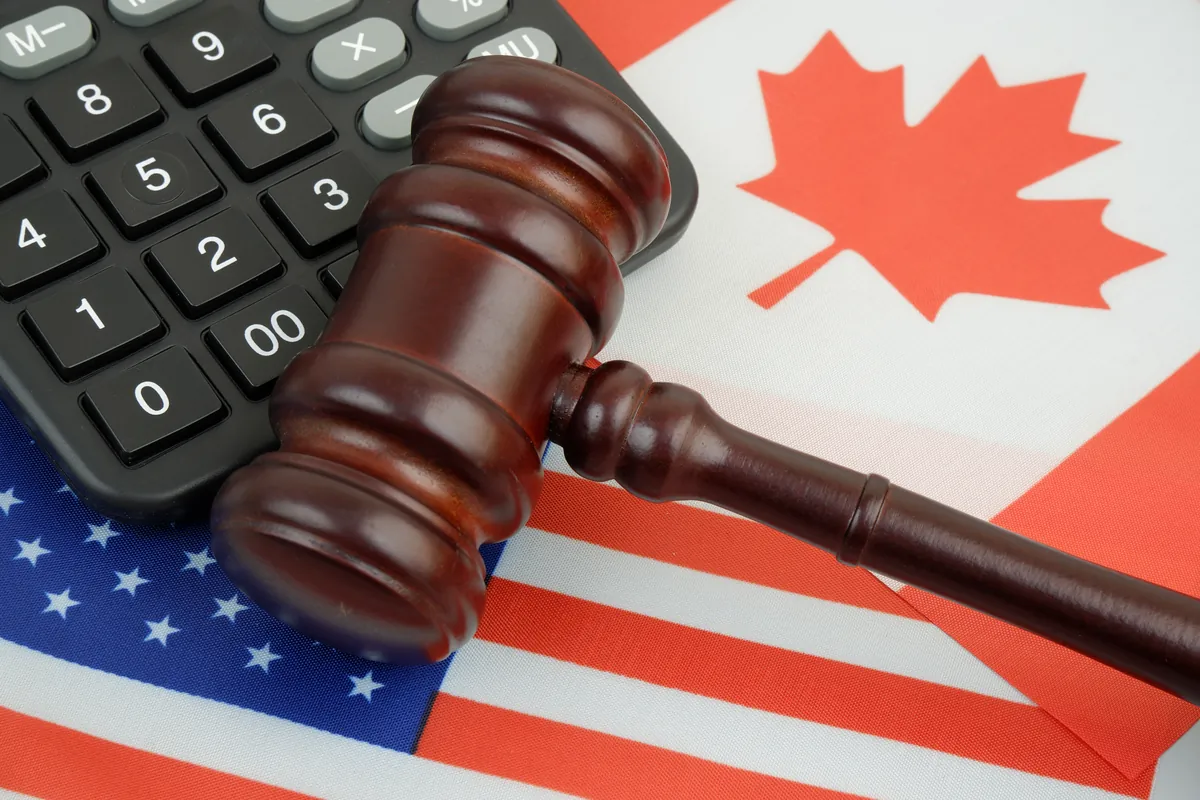 Praznik warns the tariffs will disrupt North America’s tightly integrated cosmetics industry.
Cosmetics across the borders
Trump announced the sweeping tariff on hundreds of items alongside accusations that Canada’s trade policy discriminated against American goods in the motor vehicle, alcoholic beverage, and dairy sectors. Some Canadian provinces have, for example, bans on selling US liquor, which itself is a response to Trump’s trade regime and annexation threats.
The PCPC says it shares the US administration’s objective to strengthen US-based manufacturing, expand exports, and build resilient supply chains. But it cautions that the personal care industry’s success is “built on integrated North American supply chains, which allow manufacturers to access essential inputs, produce competitively, and support American jobs.”
Praznik says that the adoption of the Canada–US Free Trade Agreement (FTA) in 1988, followed by the addition of Mexico in the early 1990s, led the cosmetics industry to become highly integrated across North America, with “significant manufacturing” taking place in all three countries.
“This has led to greater efficiencies in manufacturing and distribution and facilitated innovation and greater value for consumers in all three jurisdictions,” he adds.
He explains that Canada is not only a major importer of US-manufactured cosmetics but also a significant exporter to the US. “This is why our three industry associations in Canada, the US, and Mexico have been united in calling for the continuation of tariff-free trade for our sector across North America.”
Praznik says the 50% tariff on Canadian exports has “put all of this at risk.”
“By including cosmetic products in this latest round of the trade war, and by specifically excluding CUSMA-compliant goods, the US administration is inviting the return of counter-tariffs on these same products should the Canadian Government be forced to respond.”
Regarding retaliations, the PCPC urges policymakers to maintain an open, predictable trade environment that is “essential to supporting innovation, investment, and growth across the North American cosmetics and personal care products industry.”
Retaliation’s real cost
Praznik expects certain cosmetics and personal care products to be included if Canada chooses to implement counter-tariffs. He predicts high costs and difficulties for personal care companies importing products from the US as a consequence.  The PCPC points to a US$1.9 billion American surplus in finished personal care goods.
“As we witnessed in the earlier round of Canadian counter-tariffs, the cost of these counter-tariffs could not always be passed on to consumers, as competitive products manufactured in other jurisdictions or in Canada were available.”
Praznik suggests that Trump’s behavior toward Canada damages the “Made in US” brand. He says the president’s threats to make Canada the 51st state, and a “host of other insults and attacks on the country have understandably undermined the US among Canadians.”
“In a world where most individuals have little control over events, their purchasing decisions are ones that they do control.”
Praznik says Canadian consumers’ buying decisions have already been felt against the US’ food, travel, and auto sectors.
“Although not yet deeply felt in the cosmetics and personal care sector, it is a factor that the cosmetic industry must include in its calculations in serving the Canadian market.”
The certainty problem
Speaking on Fox and Friends on July 28 about the new tariff, Trump said he does not care about updating the USMCA and would rather the US be independent. He told the US news program that it is Mexico and Canada that need the US.
This sort of rhetoric is what Praznik points to as deepening tensions between the trade allies.
“Trump’s clear violation of CUSMA, which he negotiated and signed off on just six years ago, is clearly showing… that the US government can no longer be trusted to keep any agreement… and, as the world has seen with many of the so-called ‘deals’ that Trump has reached with other countries, they are only good for as long as Trump decides to adhere to them,” says Praznik.
He explains that the result is a growing realization among Canadians that “even if a new CUSMA or other side agreements are reached with the US, their longevity and certainty will only last until Trump again changes his mind or feels aggrieved over some issue.” Praznik says Trump’s disregard for CUSMA proves his point. 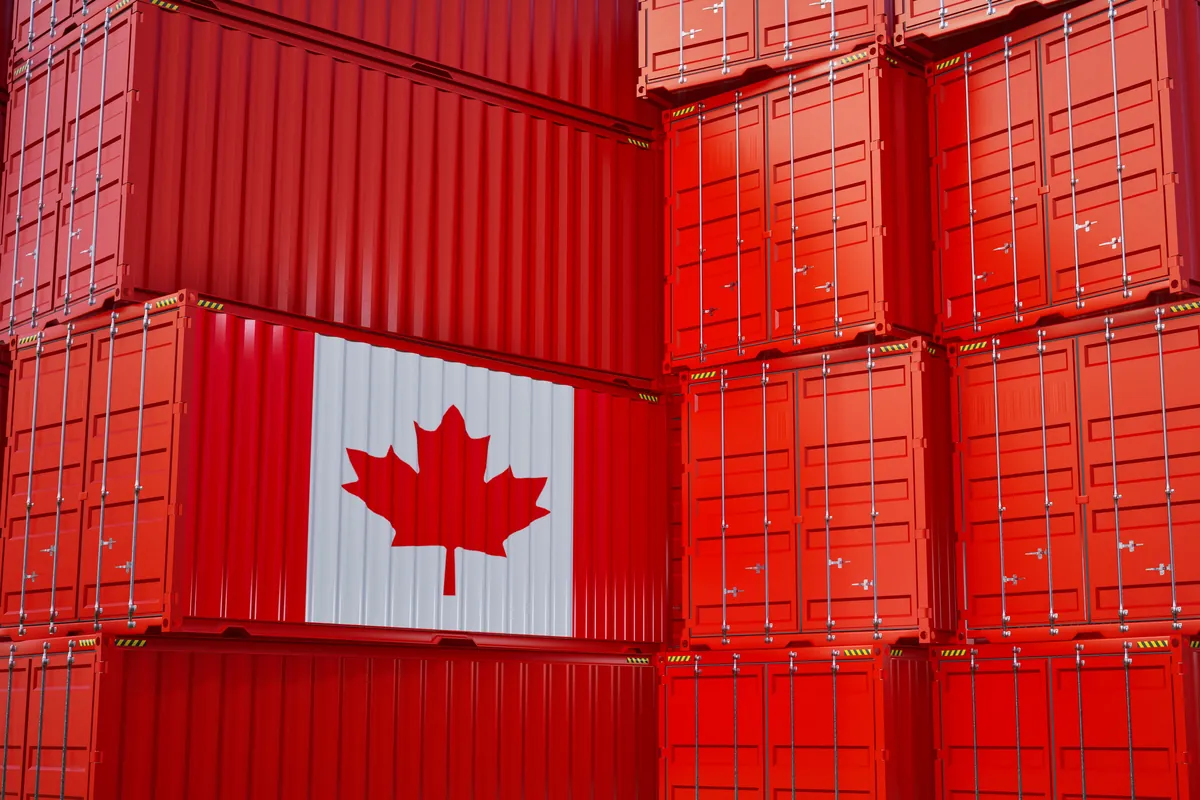 Praznik sees Canadian custom manufacturers gaining ground as US input costs rise.
Consequently, Praznik predicts that cosmetic companies will rethink their manufacturing and distribution networks to minimize the disruption of Trump’s trade war.
“Recent analysis of Canadian-based cosmetic manufacturing — including Canada’s large custom manufacturing sector — has shown a decided advantage over US-based manufacturing for international markets, given Canada’s broad and growing range of FTAs.”
“Unlike the US, these FTAs allow for tariff-free imports of many manufacturing inputs and allow tariff-free access to a large number of markets, including the EU, UK, and countries within the Trans-Pacific Partnership, for example,” says Praznik.
He adds that Canada is in the process of negotiating comprehensive trade agreements with several other important jurisdictions, including India, which it hopes to conclude by the new year.
Praznik warns the tariffs will disrupt North America’s tightly integrated cosmetics industry. Praznik warns the tariffs will disrupt North America’s tightly integrated cosmetics industry. Praznik warns the tariffs will disrupt North America’s tightly integrated cosmetics industry. The PCPC points to a US$1.9 billion American surplus in finished personal care goods. The PCPC points to a US$1.9 billion American surplus in finished personal care goods. The PCPC points to a US$1.9 billion American surplus in finished personal care goods. Praznik sees Canadian custom manufacturers gaining ground as US input costs rise. Praznik sees Canadian custom manufacturers gaining ground as US input costs rise. Praznik sees Canadian custom manufacturers gaining ground as US input costs rise.