
The Netherlands Enterprise Agency has committed up to €400,000 ($465,000) in funding for a Partners for International Business cluster to help companies develop blended proteins for the meat-reducing French market.
As blended meat makes its way onto more and more European plates, one country has been leading the adoption of these products.
In the Netherlands, these balanced proteins (which combine animal and plant-based ingredients) have appeared on the shelves of major supermarkets like Lidl, Aldi, Albert Heijn and Jumbo – and often at lower price points than conventional meat and dairy. In fact, over 90% of blended proteins in the country are sold by these retailers’ private-label brands.
Now, the Dutch government has realised these products’ potential to lower climate harm and improve public health. The Netherlands Enterprise Agency (RVO) has approved a three-year Partners for International Business (PIB) cluster to help local companies gain a foothold in a French market primed for blended meat.
PIB programmes enable Dutch businesses to leverage a public-private partnership to realise their international ambitions, joining forces with other companies and the federal government to navigate trade barriers, local laws, and a lack of knowledge among administrations.
“For smaller companies without a large staff of people and budget and with an international growth ambition, a PIB can facilitate getting the right connection with potential customers and/or suppliers,” explains Leo Koning, manager of Wageningen-based non-profit Foodvalley’s The Protein Community, which is running the initiative in collaboration with RVO and the Dutch embassy in Paris.
Tha candidates, which include startups like NoPalm Ingredients, Fiber Foods and Algmighty, cover the entire value chain, from novel protein sources and functional ingredients to process development and factory scale-up.
“The support in budget from RVO is a maximum €400,000 ($456,000) for this PIB, for three years in total,” he tells Green Queen. “When this PIB kicks off in October 2026, probably nine organisations will be participating. It is possible for organisations to apply later and join after the start. The optimal size is around 12 organisations.”
Fibre in the spotlight amid decline in French meat consumption

Interviews with French organisations and industry experts organised by The Protein Community, RVO and the Dutch embassy since last year have given the consortium key insights into the market.
Meat consumption has been steadily declining in France over the last two decades. One survey revealed that 53% of its citizens have cut back on meat in the last three years alone. The French government has been supporting this shift, updating the national dietary guidelines to recommend limiting meat and increasing plant-based protein consumption.
This protein transition is being driven by concerns around high meat prices (52%), negative health impacts (38%), and environmental impact (33%). Blended meat cuts through all these problems. Reducing the animal protein component also lowers associated emissions, water use, and land use, and, as Dutch companies have shown, blended proteins are already 4.4% cheaper than meat and dairy.
Research by Foodvalley suggests that many blended meats outscore their 100% animal equivalents in terms of nutrition. Balanced proteins lower saturated fat and cholesterol intake, and crucially, they’re boosted with fibre from the plant-based sources.
The latter is a key focus for the PIB, through which Ditch companies are looking to bring their expertise in alternative protein and fibre-rich ingredient production to France, where cultivation and primary processing are strong, but taste, texture and scale still lag.
By swapping a portion of animal protein with alternatives that have a good amino acid profile and extra fibre, proteins in France can become healthier, more sustainable, and hence more attractive to mainstream consumers.
Project expected to lead to ‘new and improved products’ in France
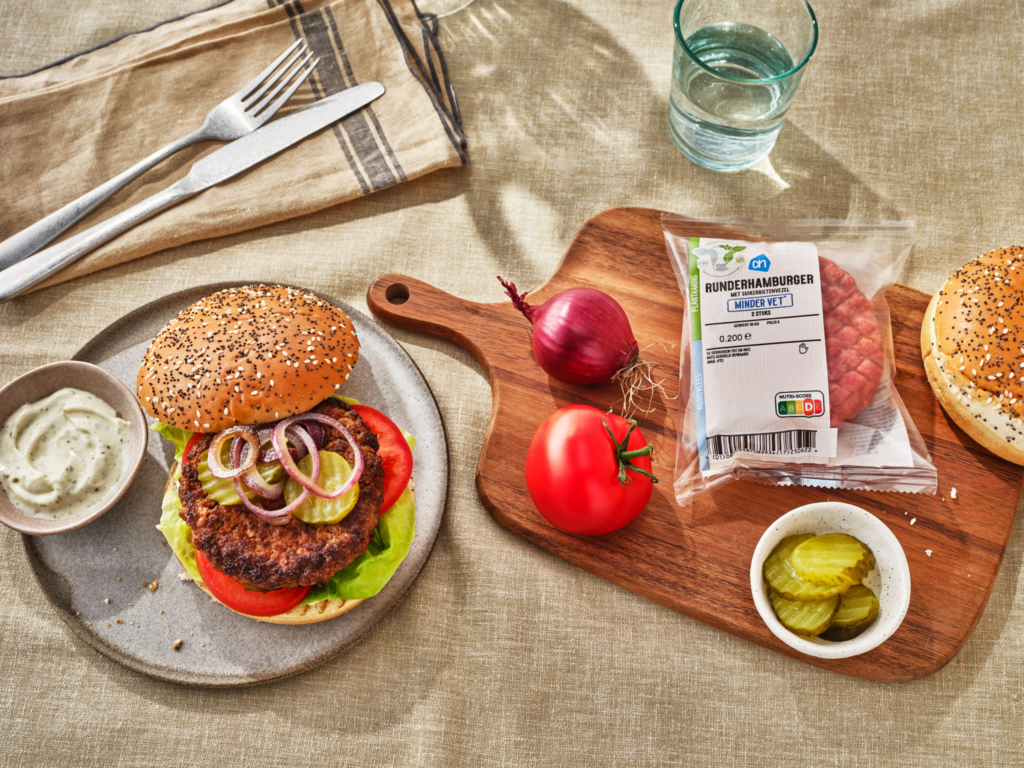
Koning points out that blended proteins have been available to consumers in the Netherlands for several years. “There is a highly innovative food ecosystem with ingredient suppliers, processors, knowledge institutes (like Wageningen University) and outlets willing to create and sell new, sustainable and tasty products,” he says.
“A driver for this category is the positive effect on climate (less CO2) and targets that retailers have agreed upon. Also, the (lower) price and health benefits do make this an interesting product category,” he adds.
The Dutch companies in the PIB cluster will develop their own products, ingredients and services to present to French businesses. “It’s my personal expectation that, due to local preferences in taste, texture, and cooking culture, it will lead to new and improved products in France. Learnings from these collaborations and product improvements can also be used in other markets,” Koning notes.
The programme will be a mix of “intensified contacts” with relevant French companies and stakeholders via events and presentations, company visits to both France and the Netherlands, one-on-one matchmaking, and more.
“It also consists of a knowledge module to share information between the French and Dutch ecosystems on the topic of hybrid food innovation and ingredient swapping. It is a joint effort with Dutch organisations, the Embassy and other liaisons and interested companies in France,” he says.
“The end goal is that the programme supports better market access to France and [solidifies the] position [of] the cluster in this promising market of hybrid products.”