
The period care industry is responding to the growing conversation about menstrual health with campaigns focused on awareness, reducing shame, and mapping out steps to achieving equity. Solutions in the sector have moved beyond general period maintenance and into inter-generational care across pain points.
Companies are recently targeting outdated narratives around period care and tackling issues regarding menstrual health that often go overlooked across all ages.
This week, Cora launched its first campaign, “Back to School.” It targets young menstruators and reimagines period care for Gen Z and Gen Alpha with a humorous tone. The clean period care brand aims to capture the attention of the group that has been shown to be looking for real solutions rather than being told to “just deal with it.”
Meanwhile, Procter and Gamble subsidiary, Always, has partnered with CVS Health and The Fibroid Foundation to start conversations on menstrual care, fibroids, and period health education in the US. The campaign underlines how, despite being incredibly prevalent, fibroids — noncancerous tumors that grow in the uterus — do not receive necessary attention.
Young generation demands difference
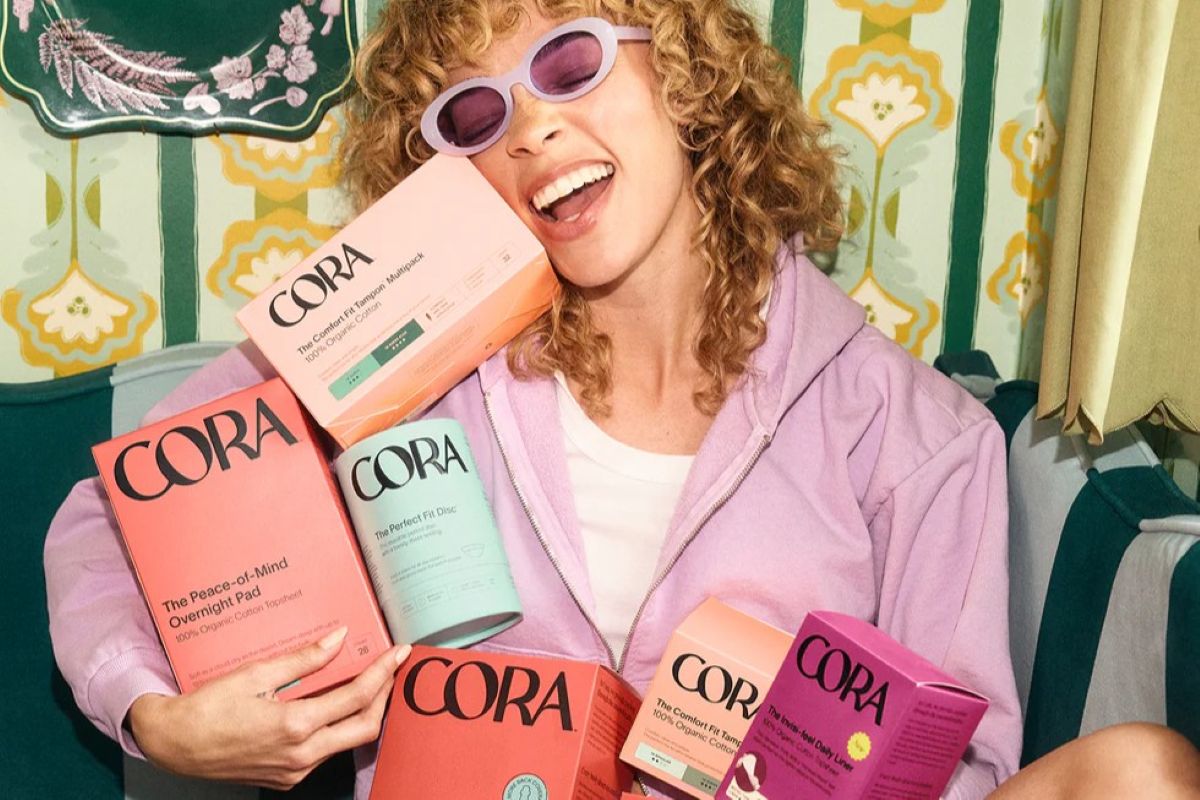 Cora's campaign reimagines period care for younger consumers. (Image credits: Cora)According to Cora, Gen Z and Gen Alpha consumers are least willing to accept “that’s just how it is” as an excuse for products that cause pain or discomfort. The brand states that, having grown up with more choices, more information, and higher standards, this consumer base demands more.
“Period care has been marketed at young women for decades without actually listening to them. That ends with us,” says Dana Cohen, chief marketing officer at Cora. “This generation doesn’t want to be told to just deal with it — they want products and brands that reflect how they actually live. That’s exactly what Cora is.”
Cora aims to address this demand with its Comfort Fit Tampon made with 100% organic cotton and Peace-Of-Mind Pad featuring a 100% organic cotton topsheet.
The brand’s Back to School campaign leverages the familiar experience of painstakingly sitting through a health class that matter-of-factly explains tampons and pain. The video opens in a health class, where many people are introduced to period care for the first time.
In the scene, the teacher, who is walking the student through the process of inserting a tampon, states that pain and discomfort are normal. A student challenges this narrative, stating that this does not need to be the case. She presents Cora to her peers and the teacher.
“I still remember watching an outdated health-ed VHS while my teacher made fallopian tube-shaped pancakes,” says Morgan Sterns, creative director at Cora. “We wanted to tap into that nostalgia while reframing today’s period care around comfort and clean products.”
Always underlines racial disparities in menstrual health
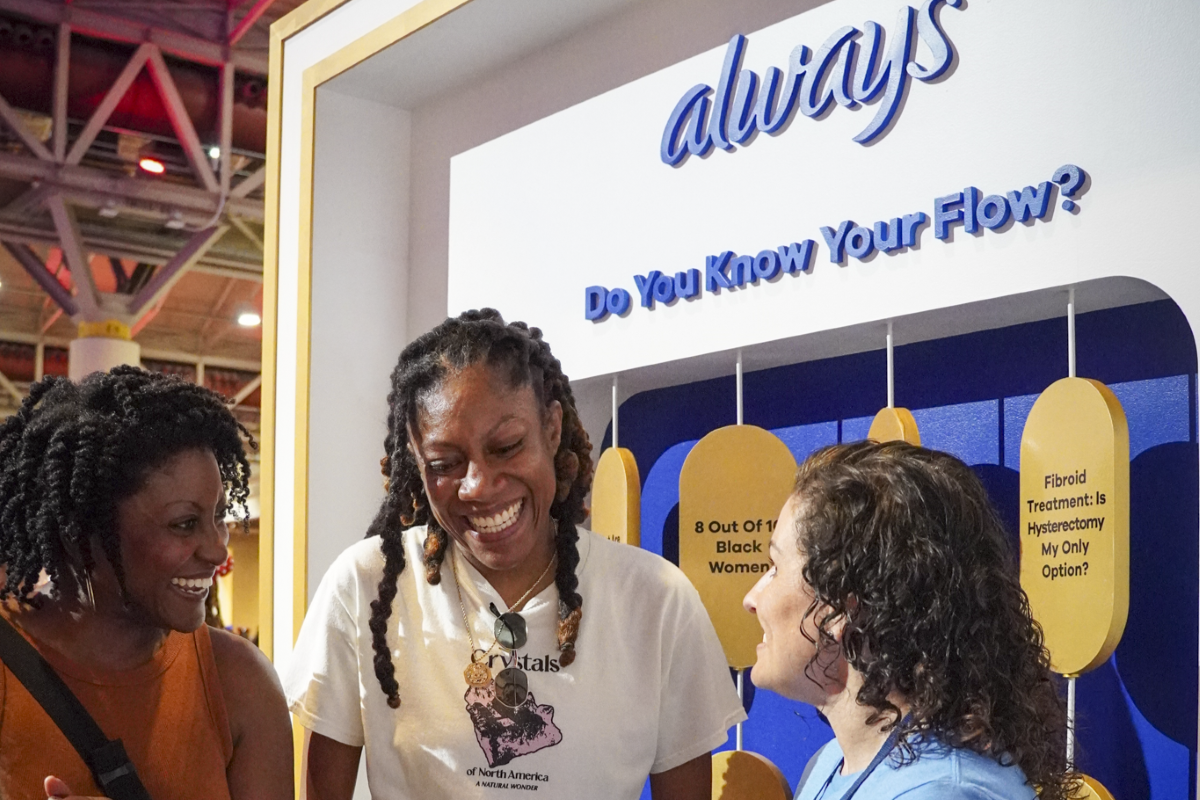 Always highlights racial disparity in fibroids and heavy menstrual bleeding.Always joined the Essence Festival of Culture (July 3–5), the largest African American culture and music event in the US, held in New Orleans. It hosted conversations on heavy menstrual bleeding, the importance of period health education, and fibroids. Women most commonly develop uterine fibroids during their reproductive years, with the average age of diagnosis between 35 and 45 years.
Through its partnership with CVS Health and The Fibroid Foundation, the period care brand presented attendees with access to menstrual health experts, resources, and product information to normalize menstrual health narratives.
Always hosted a panel discussion with industry leaders and experts discussing heavy menstrual bleeding and the disproportionate impact fibroids have on Black women. It also highlighted how health care professionals, advocates, and brands are collaborating to improve period health awareness, innovation, and empowerment.
“Awareness is where change begins. For too long, many women’s health issues have not received the attention, research, and dialogue they deserve. Education and advocacy are essential to changing that,” says KaNeeTa Kimble, VP of North America at Always.
According to Kimble, fibroids affect approximately 26 million women in the US. “Although fibroids are common broadly, Black women are disproportionately impacted, with up to 80% potentially developing fibroids by age 50 and often experiencing more severe symptoms and greater barriers to diagnosis and care.”
“That’s why we’re proud to join Essence Festival of Culture to help bring greater visibility to fibroids, create space for important conversations, and empower women with the knowledge and confidence to advocate for their health,” says Kimble.
Always also hosted onsite activations at the festival. The Always Flow State Studio invited guests to explore the Know Your Flow exhibit to become more informed about menstrual bleeding, fibroids, and how they may impact overall health.
The brand also hosted a talking circle that aimed to destigmatize the aforementioned topics and to help create support among participants. Panelists stressed the importance of understanding one’s flow to help find the right care, routines, and products for each menstruator’s experience.
Cora's campaign reimagines period care for younger consumers. (Image credits: Cora)Cora's campaign reimagines period care for younger consumers. (Image credits: Cora)Cora's campaign reimagines period care for younger consumers. (Image credits: Cora)Always highlights racial disparity in fibroids and heavy menstrual bleeding.Always highlights racial disparity in fibroids and heavy menstrual bleeding.Always highlights racial disparity in fibroids and heavy menstrual bleeding.