A new analysis finds that research linked to the livestock industry is 16 times more likely to report the benefits of meat consumption than independent studies, which the authors say is “concerning”.
Meat products have been linked to a number of chronic conditions, including obesity, type 2 diabetes, cancer, dementia, cardiovascular disease (which kills an American every 33 seconds), and early death.
But a lot of research shows the opposite. And there’s a simple reason why: they’re funded by the meat industry.
“Studies with meat industry ties reported highly favourable conclusions and rarely produced unfavourable conclusions,” write the authors of a new study published in Obesity Reviews.
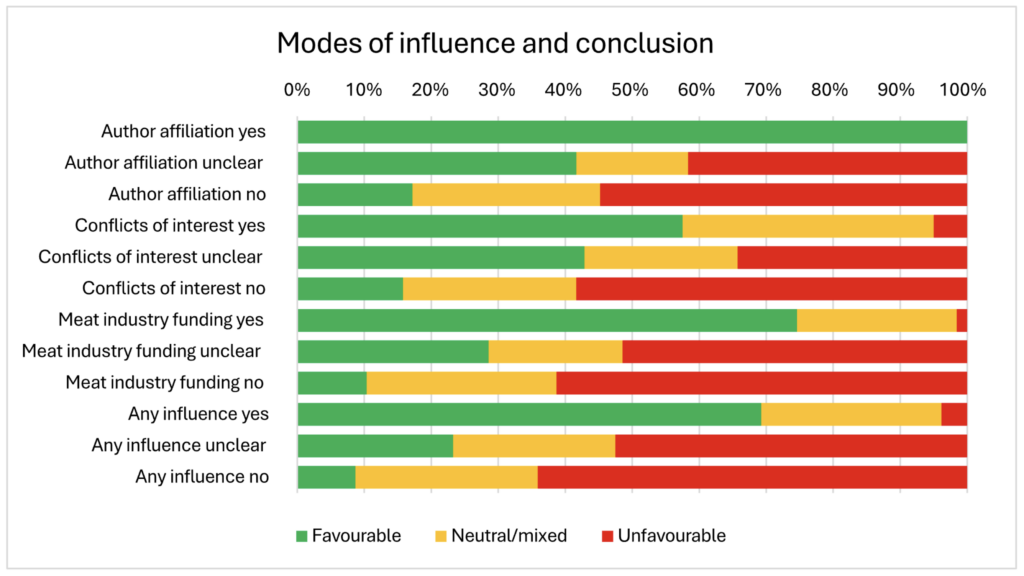
The researchers conducted a meta-analysis of 500 studies published between 2014 and 2023 and found that those funded by the livestock industry were 16 times more likely to conclude that eating meat is good for you.
Among these studies, 75% reported favourable outcomes associated with meat intake, and just one reported a negative link. In sharp contrast, only 10% of independently funded studies found a positive effect of meat consumption.
Meat industry funding the most frequent kind of influence
Around half of all studies (52%) reported unfavourable health consequences associated with meat consumption in specific quantities, while 27% identified neutral or mixed outcomes, and only 21% presented positive conclusions.
Regression analysis revealed a “significant association between meat industry ties and the likelihood of favourable conclusion”. “These findings are concerning and suggest that our statistical findings of industry involvement are underestimates. We therefore encourage caution when interpreting findings where there is a lack of transparency over funding arrangements or conflicts of interest,” the authors say.
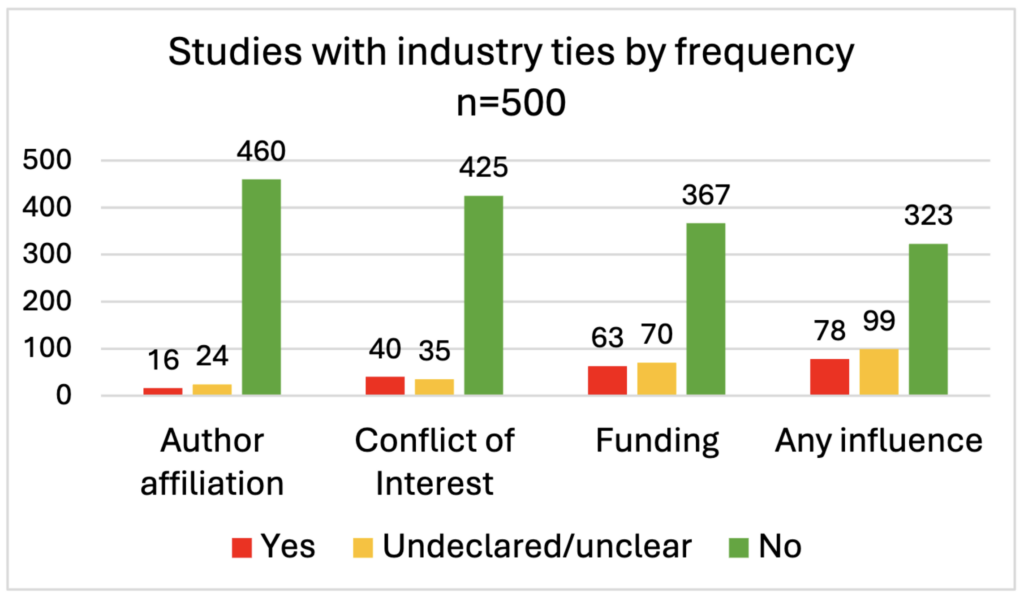
Highlighting that point, only 15.6% of the studies reported any influence from the meat industry – including author affiliations with the sector, declared conflicts of interest, or funding from livestock groups. And for another 20%, it couldn’t be determined if the research was linked to the meat industry.
Author links were the least frequent type of influence, with only 3% of papers indicating this. That figure rose to 8% for conflicts of interest, and 13% for meat industry funding.
“Direct collaboration or funding from meat corporations or companies was rare; instead, industry associations were identified as research supporters,” the study states.
“Almost half of the studies that received meat industry funding did not declare a conflict of interest (52%). This suggests that authors may not perceive financial sponsorship as a relevant conflict of interest,” it adds.
The meat industry’s most prominent funders of the analysed studies are US programmes like the Beef Checkoff or Pork Checkoff, and trade associations such as Meat & Livestock Australia, the Danish Agriculture and Food Council, and the UK Agriculture and Horticulture Development Board.
Public health experts beware
“These findings support existing evidence that food industry involvement in scientific research often leads to favourable results or conclusions for the industry. Industry can leverage these findings to issue press releases, a key tool for promoting medical research, to attract media attention, or to influence policy and regulation,” the authors outline.
Indeed, livestock interest groups spend millions on lobbying policymakers and influencers in the US every year, playing a key role in spreading misinformation about both the meat industry and the alternative protein space.
“Our study highlights the importance of transparency guidelines in scientific research and the need for their enforcement through medical and nutrition journals and their editors. Journal editors and reviewers should remain vigilant to potential conflicts of interest and their impact on study conclusions,” the researchers write.
They call on experts to develop nutritional guidelines, train nutrition professionals, or create educational materials to exercise care when using evidence with ties to industry – including evaluating the study design, methods, and results rather than relying on the conclusion.
“In particular, public health experts should be aware that industry affiliation and funding may influence research conclusions,” they add.
The research comes months after another similar study revealed that meat-industry-backed studies were nearly four times as likely to conclude that red meat consumption has a neutral or beneficial effect on cardiovascular health.