
Israeli food tech firm Phytolon has secured $23.6M to commercialise its fermentation-derived alternatives to food colours, starting with red dye.
The Make America Healthy Again-led war on artificial food dyes is catching investors’ attention, with one alternative colouring startup completing a sizeable Series B raise.
Phytolon, which uses baker’s yeast and precision fermentation to produce natural pigments for the food industry, has bagged $23.6M in the three-stage round, which was led by an undisclosed strategic investor.
The majority of the capital was secured in the last phase in April, which involved existing investors Millennium Foodtech, NextGen Nutrition, Colorcon Ventures, and Yossi Ackerman.
The firm will use the funds to commercialise its natural alternatives to synthetic food dyes, starting with a beetroot red colourant that was approved for use in the US by the Food and Drug Administration in February.
“This new funding will be allocated to support sales and supply to CPG [companies] and to distribution partners in the US and beyond,” said Phytolon co-founder and CEO Halim Jubran. “I am excited to see our portfolio of strategic investors increase, enabling us to grow our business and establish our footprint in the market.”
Phytolon ‘at the nexus of two mega-trends’
Precision fermentation involves inserting a specific DNA sequence into microbes to teach them to produce the desired molecules when fermented. Phytolon uses it to produce cost-effective natural food dyes that can help companies sidestep concerns about artificial and unsafe ingredients.
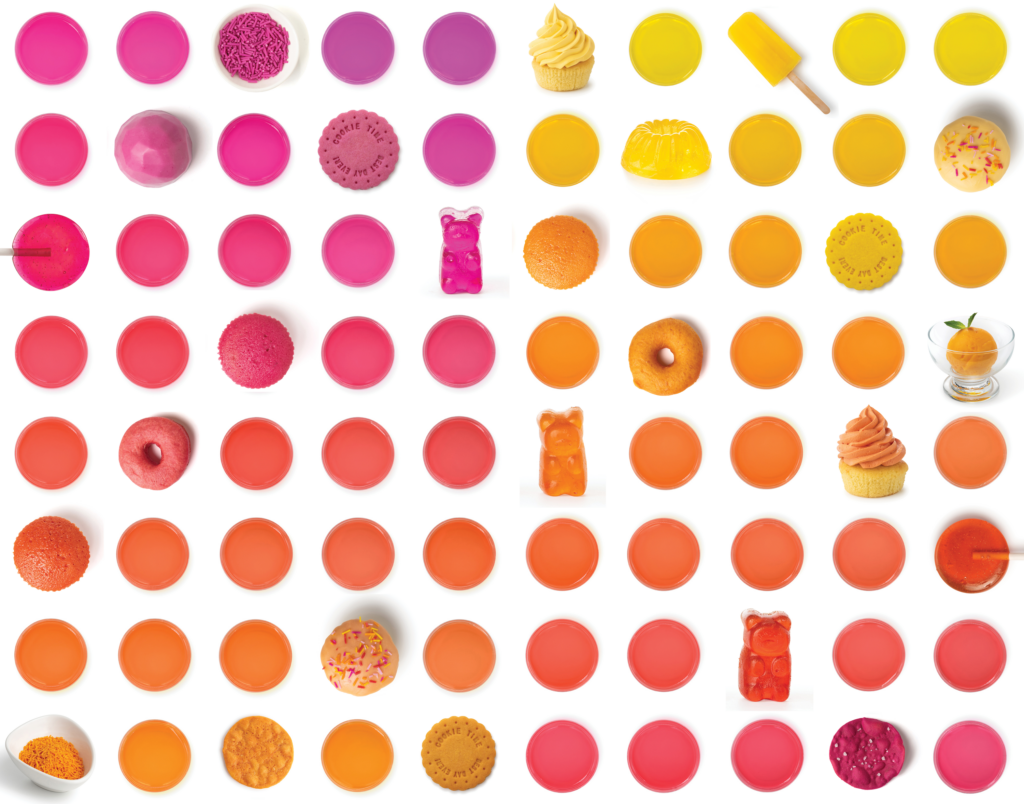
The startup’s portfolio is based on two core pigments – yellow and purple – through which it can create a palette of colours spanning yellow, orange, pink, purple, and red.
Its initial focus is on the latter. Phytolon genetically engineers baker’s yeast to produce betanin, part of a class of water-soluble pigments found primarily in red beets. Its process expresses betanin via controlled fermentation, following which the production organism is removed from the fermentation broth.
The heat- and pH-stable beetroot red colourant – an alternative to popular synthetic options like Red Dye No. 3 and Red 40 – is available both in liquid and powdered formats, and can cater to a wide range of applications, including bakery, savoury, frozen, dairy and confectionery.
While an effective date for the FDA’s final ruling is yet to be set, the agency’s amendment of the colour additive regulations to recognise the safe use of beetroot red coincided with its decision to allow food labels to claim to have ‘no artificial colors’ if they are free from petroleum-based dyes. Previously, companies could only make this claim if the products had no added colouring at all.
“With a strong network of strategic partners and recent FDA approval, Phytolon is well-positioned to capitalise on the transition toward natural dyes across food and supplement products,” said James Cali, general partner at NGN.
“Phytolon is at the nexus [of] two mega-trends – consumer and regulatory demand to remove artificial dyes and advances in fermentation to offer natural ingredients with better functionality, cost and sustainability.”
MAHA-led effort sees companies and consumers ditch artificial dyes
The investment in Phytolon comes a year after the FDA banned the use of Red Dye No. 3, a petroleum-derived colourant identified as harmful to both human and planetary health. Studies suggest it is carcinogenic in rats.
Set to come into effect next January, the move brightened the spotlight on Red 40, which is present in more than 36,000 food products across the US, making it the industry’s most used pigment. Sourced from the petroleum industry and made via a chemical reaction between two types of sulphonic acids, it’s also been linked to hyperactivity in children and cancer in animals.
Red Dye No. 3 has either been banned or severely restricted in Europe, Japan, Australia and New Zealand, while the EU has required manufacturers to put warning labels on products containing Red 40 since 2010.
Artificial food dyes appear in nearly a fifth of packaged food and beverage products in the US. In fact, research from Innova Market Insights shows that 28% of launches from Big Food companies in 2025 contained artificial dyes.
Health secretary Robert F Kennedy Jr has been pushing food manufacturers to move away from synthetic dyes, and two-thirds of Americans support this call. Giants like Nestlé, Mars, Kellogg’s, General Mills and others have obliged by eliminating these ingredients from various products, and the FDA even has a public tracker for such pledges.
Phytolon’s beetroot red colouring can be used in most food products, except for infant formula and certain foods regulated by the US Department of Agriculture. It’s also working on commercialising a prickly pear yellow hue.
It’s far from the only alt-colour startup that has benefitted from a funding boost. In November, Chromologics raised $8M to launch its food-grade, microbial alternative to synthetic red dye in the US and Europe, and in January, Octarine Bio secured $5.8M to launch precision-fermented pigments for food, textiles, and personal care.
A month later, University of Cambridge spinout Sparxell closed a $5M funding round for its plant-based colours, which can replace fossil-fuel-derived pigments in the textile, cosmetics, food, packaging, paint and automotive sectors.