
Indian precision fermentation startup StrainX Bioworks has emerged from stealth with $13M in funding, a large-scale facility, and US GRAS determination for one of its ingredients.
Taking a “full-stack” approach to precision fermentation, India’s StrainX Bioworks has exited stealth mode with a $13M funding round that will advance its goal of bringing novel proteins and molecules to market.
Founded by two Indian Institute of Technology (IIT) Delhi alums, the startup’s investment was led by Prime Venture Partners and Leo Capital, with further participation from Good Startup, Sparrow Capital, Sun Icon Ventures, Dholakia Ventures, and WindT Angels (an IIT Delhi alum fund).
“We focus on developing high-value food and nutritional ingredients through synthetic biology and precision fermentation,” co-founder and CEO Akshay Mittal tells Green Queen.
“Our platform is designed to support multiple molecules over time across food, nutrition, and adjacent categories. Our initial work involves alternative proteins,” he adds.
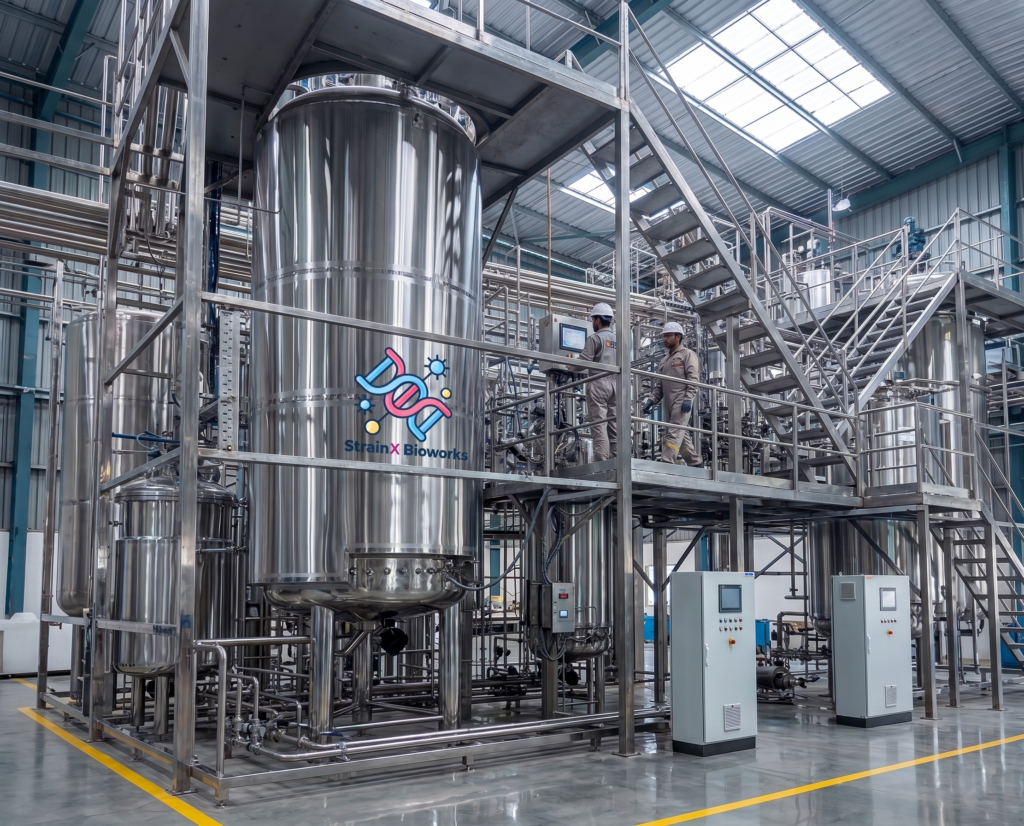
The three-year-old firm is keeping details about the specific ingredients under wraps, but has already made several big strides to commercialise its innovations. StrainX Bioworks operates a team of over 100 employees and a facility in Bhopal with a 10,000-litre fermentation capacity.
It has also self-affirmed one of its precision-fermented molecules under the US Food and Drug Administration’s (FDA) Generally Recognized as Safe (GRAS) provision, and is awaiting regulatory approval for multiple ingredients in India.
“Our focus has been to build deep technical capability with a clear path to commercialisation and scale. The real challenge is not only proving the science, but translating it into a scalable and commercially viable process,” says Alok Malaviya, co-founder and CTO of StrainX Bioworks.
“We see strong potential to work with global food and beverage companies and ingredient suppliers that are looking for innovation, adoption, and long-term partnership in next-generation food ingredients.”
StrainX Bioworks eyes expansion to 100,000-litre capacity
While in stealth mode, StrainX Bioworks focused on building deep scientific capabilities, execution velocity, and a globally competitive, multidisciplinary team, centred around an integrated biotech platform.
“We are building capabilities across the entire value chain internally, including strain engineering, process development, fermentation scale-up, downstream processing, manufacturing, and commercialisation,” explains Mittal.
“We believe this integrated model is important for owning process knowledge, improving economics, accelerating iteration cycles, and building long-term defensibility.”
The company has successfully demonstrated its process at the 10,000-litre scale. “The existing facility is designed modularly, allowing us to scale in a structured manner toward 100,000-litre capacity over time,” he reveals.
“We are thoughtful about expansion timing and expect scale-up to align closely with commercialisation and customer demand over the next 12 to 18 months.”
Explaining the decision to build its own plant rather than rely on co-manufacturers, Mittal notes that the startup views scaling up as a core strategic priority, not an outsourced operational activity.
“In India, there are still limited precision fermentation manufacturing options optimised for food applications, especially outside pharma-oriented infrastructure. Building internally has allowed us to develop expertise around process architecture, downstreaming, plant operations, and manufacturing optimisation, which we believe will become increasingly valuable as the industry matures,” he explains.
A B2B company with active regulatory filings and price parity
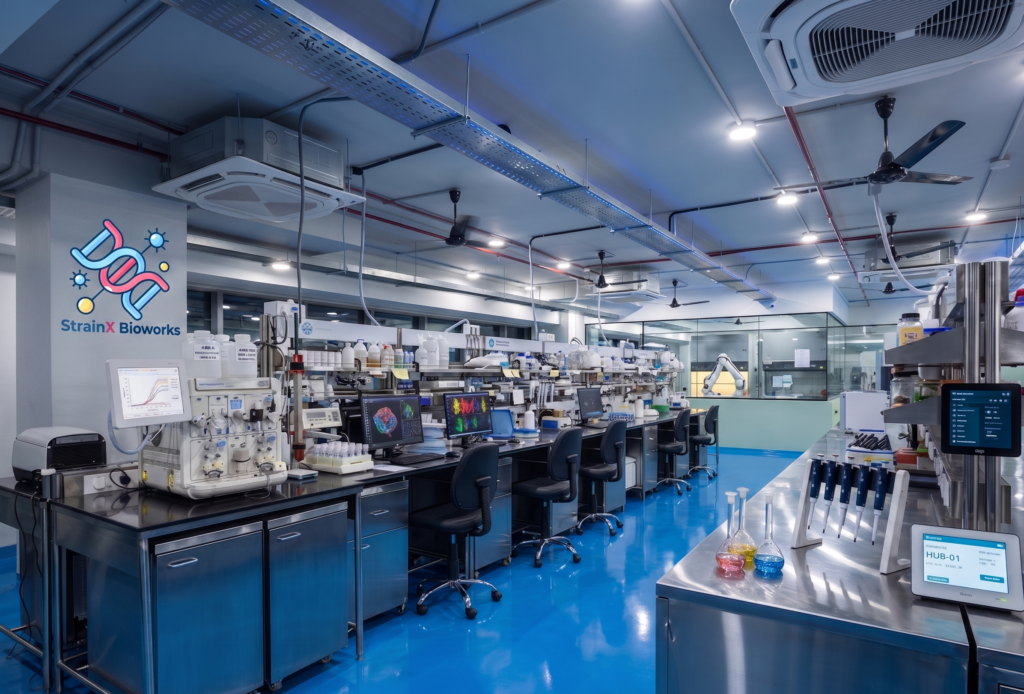
StrainX Bioworks positions itself as a B2B ingredient business, partnering with global food companies on route-to-market, formulation, adoption, distribution, and strategic commercialisation efforts.
“We believe being available across the value chain – including application development, formulation, and customer integration – is important for faster adoption and long-term differentiation,” Mittal says.
Speaking of commercialisation, the startup has already notified the FDA of its GRAS determination of one molecule in pursuit of a ‘no questions’ letter, an increasingly pertinent action given the uncertain future of the self-affirmed GRAS pathway.
Since parts of StrainX Bioworks’s portfolio remain in stealth mode, it is not disclosing the ingredient yet. But Mittal outlines: “We continue to evaluate broader regulatory pathways and commercialisation timelines, including future engagement with the FDA as appropriate.”
As it fast-tracks its commercialisation efforts, the company is now advancing its R&D and expanding scientific and engineering teams. One of its major goals is to scale up to industrial levels cost-effectively.
“Our focus is on building scalable manufacturing and process efficiencies that can progressively improve economics over time,” says the CEO. “For many next-generation ingredients, the path to parity is closely linked to fermentation scale, downstream optimisation, and supply chain maturity.”
While pricing depends on the ingredient category and its applications, he notes: “We believe India offers meaningful structural advantages in manufacturing economics. We have already reached price parity with conventional versions today.”
Why India is becoming a hub for biomanufacturing
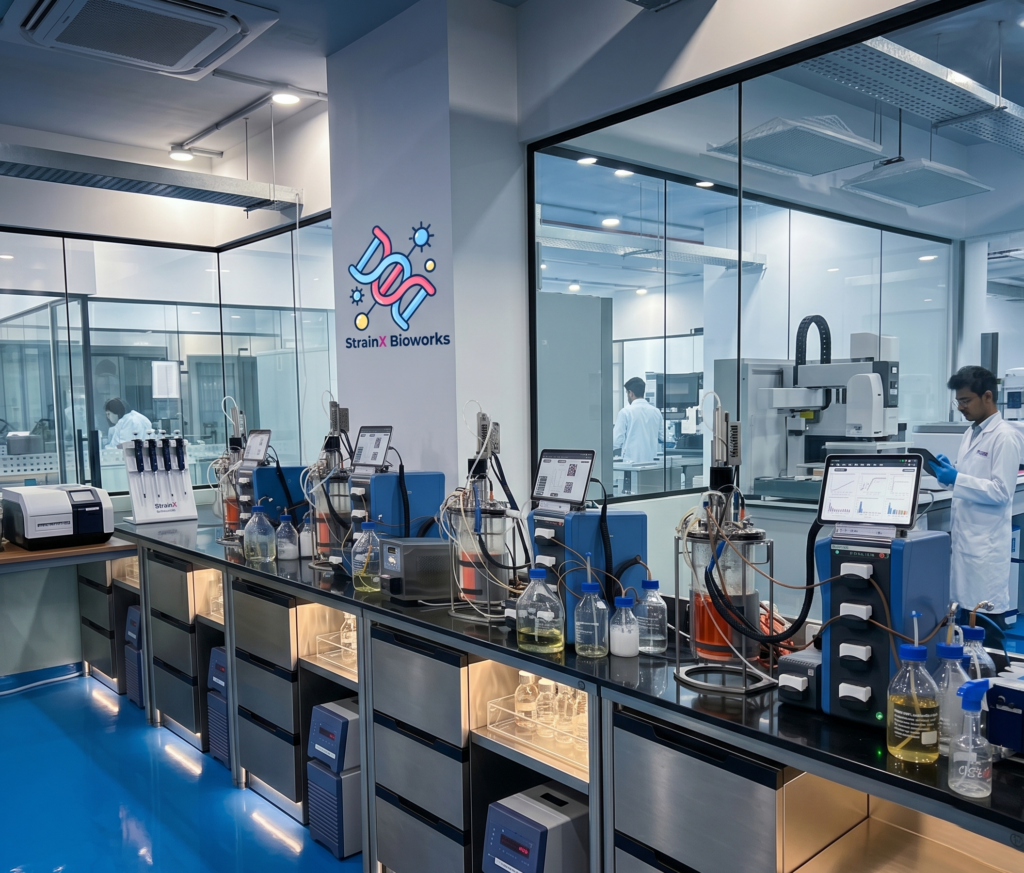
Precision fermentation for food application is still a relatively nascent category in India, involving only a handful of startups, such as Zero Cow Factory, Phyx44 Labs, and Iuva Labs.
But lately, a number of international companies have set their sights on India’s precision fermentation capacity, putting a spotlight on the country’s low capex and opex economics, availability of raw materials and equipment, and downstream processing infrastructure, as well as the government’s focus on deep tech, advanced manufacturing, and biotech as national priorities.
US startup Perfect Day, a leader in the precision fermentation space, sold a 50% stake in Mumbai-based Sterling Biotech to Zydus Lifesciences in 2024. The two firms are now building a new animal-free dairy facility in Gujarat, which is set to begin operations this year.
In February, German biotech giant Glatt teamed up with India’s PreferCo to launch a precision fermentation scale-up centre in Hyderabad.
And last month, local company Praj Industries established a precision fermentation lab in Pune and signed an MoU with a government body to accelerate the technology’s industrial scale-up.
“India is a highly compelling place to build precision fermentation manufacturing,” said Mittal. “The economics are attractive, but just as importantly, the country has the talent base, supplier ecosystem, and industrial foundation needed to support scale.”
Brij Bhushan, managing partner at Prime Venture Partners, said StrainX Bioworks combines “two things that are rarely found together in biotech”: serious science and sharp business execution. “The company is not just building molecules in a lab. It is building the team, platform, manufacturing capability and partnerships needed to take Indian bio manufacturing to the world,” he said.
Why StrainX Bioworks’s bucked the fermentation funding fallout
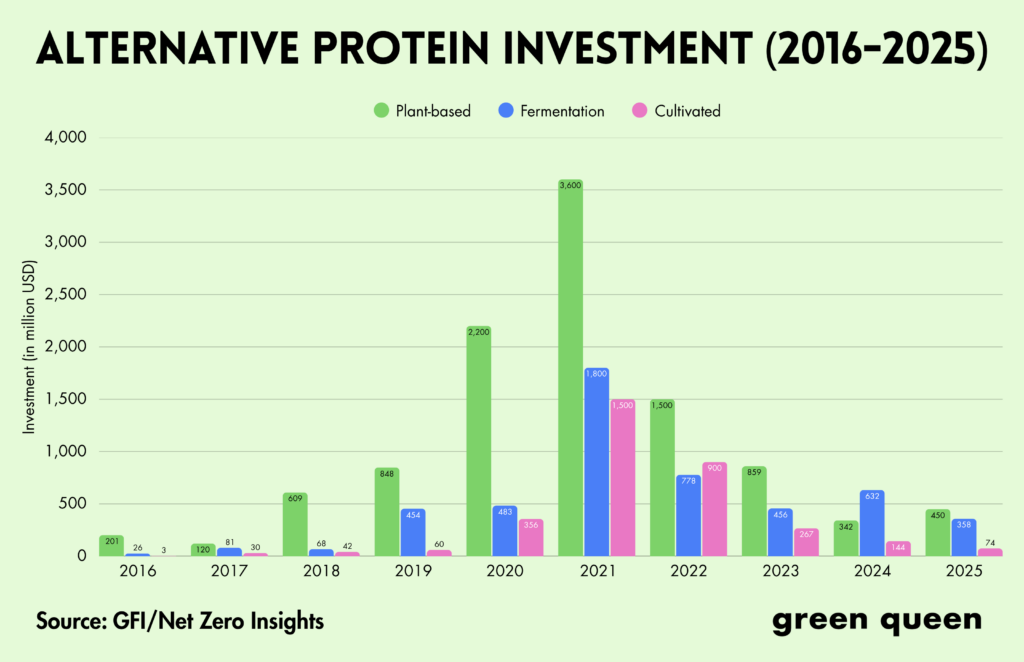
The investment round comes amid declining VC interest in alternative proteins. Last year, funding for this sector fell by 20%, attracting just $881M. It was the first time this figure fell below the $1B mark since 2018.
Investment in fermentation companies totalled $357M, a 43.5% dip from the year before. “The broader precision fermentation and alternative protein sector has gone through a reset globally, particularly around timelines, scalability expectations, and commercialisation readiness,” Mittal points out.
“Investors today are looking much more closely at technical execution, manufacturing capability, economics, and realistic scale-up pathways,” he adds.
This year, though, there has been a resurgence for startups with a proven commercial-scale pathway. In France, Verley raised $38M to launch its animal-free whey proteins, and Standing Ovation brought in $34.2M to commercialise cow-free casein. China’s Guoke Xinglian, for its part, secured $14.6M to scale up its precision-fermented human lactoferrin.
“For us, the conversation with investors centred around building a long-term, full-stack platform company from India with strong technical depth, manufacturing capability, and scalable economics,” Mittal says when asked what made StrainX Bioworks’s fundraising effort successful.
“We believe our integrated approach, operational progress, manufacturing infrastructure, and India-centric cost advantages resonated strongly with investors.”