
German ingredient giant Crespel & Deiters has teamed up with Finland’s Happy Plant Protein to deploy its one-step dry extrusion technology at commercial scale.
Happy Plant Protein, a Finnish company that produces plant proteins via a one-step dry extrusion process, is stepping up to commercial scale through a partnership with German ingredient manufacturer Crespel & Deiters.
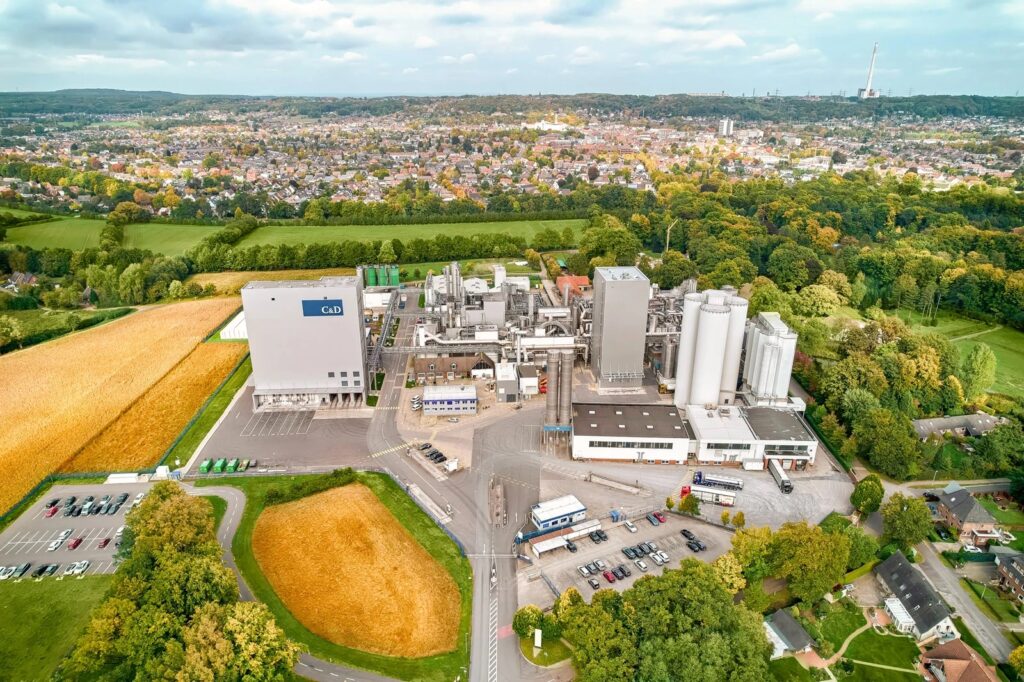
The startup’s tech enables the production of textured vegetable protein (TVP) from locally grown crops, and is now being deployed at the Crespel & Deiters’s Helmond facility in the Netherlands, which is operated by extrusion specialist ECP.
It represents the first commercial-scale implementation of Happy Plant Protein’s tech by a major European manufacturer. For Crespel & Deiters, it forms part of a broader strategic expansion beyond its wheat focus, with the two companies working with several legumes, including pea and fava beans.
The partnership comes months after Happy Plant Protein made a €6M ($7M) greenfield investment to help build a first-of-its-kind facility to process local crops into high-value proteins in Latvia.
Happy Plant Protein’s tech delivers ’modern, cost-efficient’ manufacturing
Having spun out from the VTT Technical Research Centre of Finland in 2024, Happy Plant Protein leverages a single-step extrusion process to tackle the bitter and beany off-flavours found in traditional plant protein isolates.
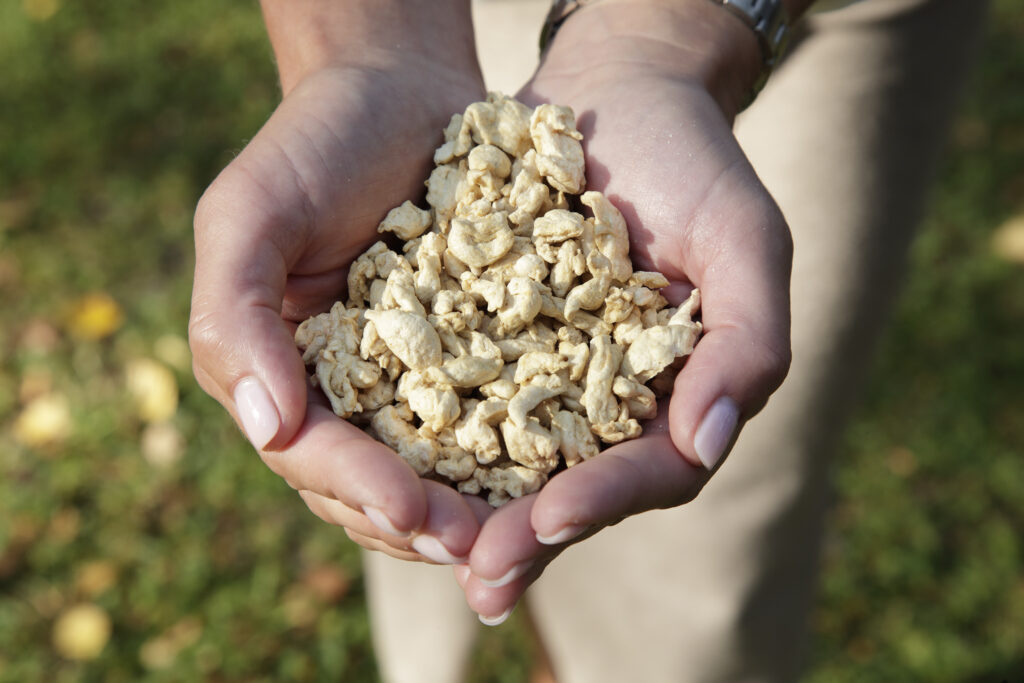
It converts legume flour directly into textured protein through dry extrusion under heat and pressure, with minimal water and energy use and no isolates, chemicals, or waste. The process is compatible with a wide array of legumes and cereals, and can be integrated into existing manufacturing setups with minimal investment.
The texture, bite and functionality of its ingredients can be adjusted directly during extrusion, allowing manufacturers to tailor the protein to their specific product requirements, from firm, meat-like structures to softer, more porous formats.
By simplifying the textured vegetable protein (TVP) production process, Happy Plant Protein aims to adapt these ingredients’ texture, hydration behaviour and functionality to unlock a new wave of plant-based and blended meat products, ready meals, snacks, and more.
This tech is now being incorporated into Crespel & Deiters’s Helmond site, which has been running since 1998 and houses a technical centre with a laboratory extruder and modern production lines.
“We are adopting Happy Plant Protein’s dry extrusion because it offers a modern, responsible and cost-efficient way to manufacture ingredients,” said Philipp Deiters, CSO of food at the 168-year-old company.
”At our Helmond site, we are scaling the technology with our extrusion expertise to produce functional, neutral-tasting TVP from European-grown legumes – faster, more sustainably and closer to our customers’ needs.”
Scale-up efforts align with EU Protein Plan
Happy Plant Protein suggests that its production model enables shorter and more resilient supply chains, creates new revenue streams for farmers, and strengthens local value creation at the source.
The Helmond facility marks the first tests of its technology at large scale, with the production set to serve European food manufacturers seeking high-quality, regionally sourced protein ingredients.
“This collaboration demonstrates that major ingredient manufacturers are looking for new ways to bring plant proteins to market more efficiently. For us, it validates both the technology and the growing demand for plant-based ingredient solutions in Europe,“ said Jari Karlsson, co-founder and CEO of Happy Plant Protein.
This isn’t the only effort it has made to scale its technology. It will license its extrusion tech and optimise raw materials like fava beans, oats, and peas to ensure consistent, high-quality protein output at the aforementioned Latvia facility, which will be operated by local company Agrofirma Lobe.
Financing for this site has been partly supported by the EU, and construction is set to take a year. Production is expected to begin in early 2027, with a capacity to churn out around 5,000 tonnes of protein ingredients annually.
Moreover, Happy Plant Protein unveiled a TVP offering made from fava beans last year. It contains 61g of protein and 9g of fibre per 100g, and can boost the structure and overall composition of plant-based and blended proteins, among other foods.
The Crespel & Deiters partnership follows the European Commission’s publication of its Protein Plan, which focuses on reducing the EU’s dependency on imported plant-based proteins.
The strategy, which has been criticised for prioritising livestock feed over human food, acknowledges that legumes and pulses are an important part of a varied and sustainable diet, despite only accounting for 2% of EU protein intake.
The Commission plans to raise awareness about legumes and pulses in its annual promotion work programme and incorporate them into its Buy European campaign, while noting that the proposal for the next Common Agriculture Policy enables the introduction of standards for protein crops to encourage consumption among Europeans.