
Israel’s Coffeesai has partnered with Brevel to produce cell-cultured coffee using the latter’s illuminated fermentation technology.
Israeli food tech startups Coffeesai and Brevel have teamed up to accelerate the production of cell-based coffee with light as a key ingredient.
Coffeesai uses 3D cell expansion technology to create climate-friendly coffee via cellular agriculture. This process directly grows single plant cells in suspension in fermentation tanks, enabling consistent, year-round production independent of weather conditions and with minimal land and water use.
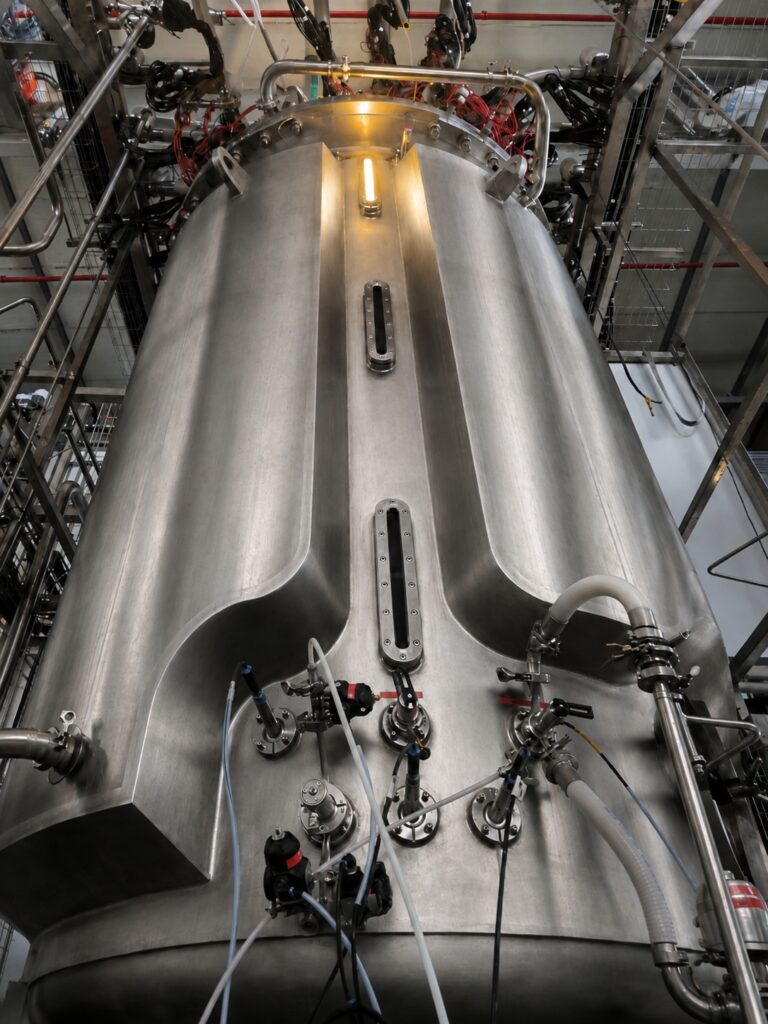
Brevel, meanwhile, has developed an illuminated fermentation process that combines the technology with light to unlock capabilities unattainable by traditional dark fermentation, which lacks light-dependent nutrients, functionalities and overall commercial value.
It first applied this innovation to microalgae and has successfully marketed it to the nutraceutical industry; it is now applying it to Coffeesai’s process to explore how illuminated fermentation can help scale up production of cell-based coffee.
The partnership is underpinned by funding from the Israeli Innovation Authority, which granted Brevel $1M to expand its light-based fermentation technology platform for plant cell culture companies.
Brevel has validated its platform’s ability to expand Coffeesai’s coffee cell culture production to commercial volumes. “We are now discussing the next stages with Coffeesai,” Brevel co-founder and CEO Yonatan Golan tells Green Queen.
“In addition, we are working on scaling capacity in a few different locations in parallel, which will be up and running by late 2027/early 2028 and will enable us to produce a product like coffee at relevant commercial volumes.”
Light-based fermentation boosts flavour of cell-based coffee
Coffeesai is a spinout of listed cellular agriculture firm Pluri, which expanded into cell-based coffee under the PluriAgTech vertical in 2024, using breakthrough cell tech to create eco-friendly alternatives to carbon-intensive foods.
The pivot was driven by the uncertainty facing the coffee industry, which is increasingly exposed to climate change and productivity constraints. Research shows that 60% of coffee species are already endangered, and the tropical areas suitable for coffee cultivation are set to be halved by 2050.
Between 2021 and 2025, Brazil, Vietnam, Colombia, Ethiopia, and Indonesia – which represent 75% of the global coffee supply – experienced 57 extra days of harmful heat (above 30°C). The declining yields have pushed prices to all-time highs. In the US alone, the cost of coffee is up by 47% from five years ago.
Coffee production itself is a culprit. A kg of coffee beans, on average, generates more greenhouse gases than the same amount of poultry and pig meat combined. Plus, it takes 140 litres of water to produce enough beans for one cup of joe.
Plant cell culture helps sidestep these challenges, and adding illuminated fermentation only makes the process more efficient. “Coffee cell culture can be done in the dark. However, light acts as a potent elicitor of secondary metabolites, which affect the flavour profile of the cells,” explains Golan.
“In our collaboration with Coffeesai, we discovered a strong correlation between light intensity and the flavour profile of the resulting coffee. This specific flavour property was not achievable by other means. This means that light adds another lever to the cultivation process to finetune the product characteristics to meet consumer demands.”
At the core of the process is the use of controlled light exposure within the bioreactor to actively influence the cell’s output. During the trials, manipulating the specific light profile was found to enhance the flavour and aroma of the resulting biomass by modulating the expression of desirable value-added compounds.
According to Brevel, the trials’ success was defined by achieving stable, high-density cultivations output, alongside measurable, light-dependent improvements in the quality attributes of the biomass.
“We are encouraged by the initial results from Brevel’s platform and its potential to influence certain aspects of the sensory profile,” notes Coffeesai CEO Ami Herman. “We continue to evaluate its capabilities as we advance our development efforts and determine future production pathways.”
Brevel’s illuminated fermentation can help startups scale up and cut costs
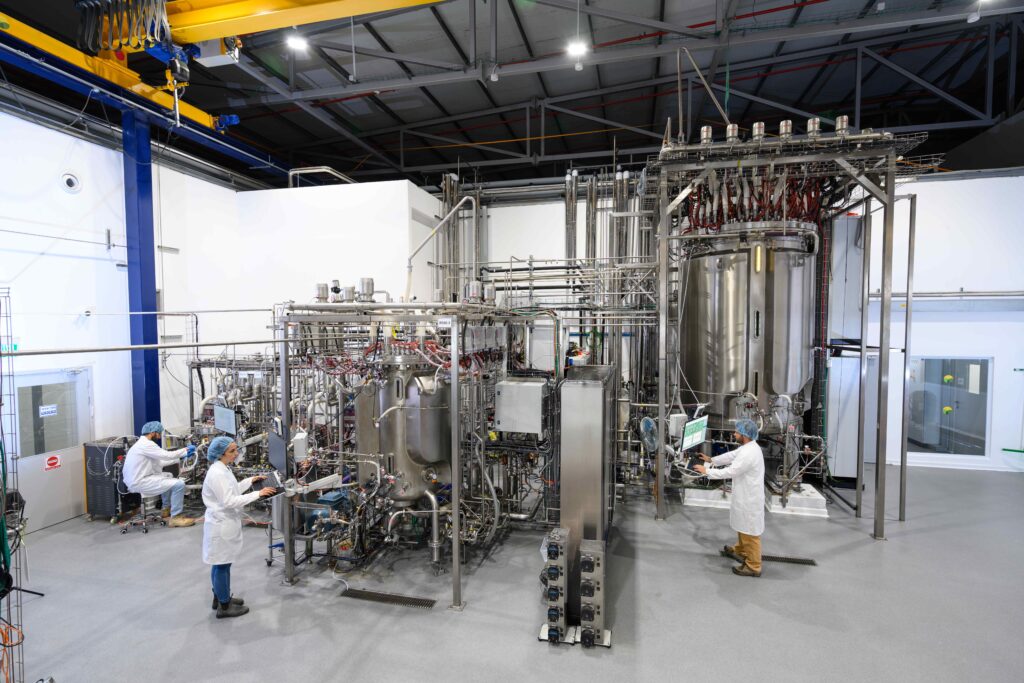
Golan states that Brevel’s work in coffee cell culture demonstrates its fermentation platform’s ability to achieve high cell densities while sustaining continuous growth through an advanced semi-continuous cultivation process. That clears the way for scalable, efficient production.
This approach addresses limitations of dark fermentation, applying precise light profiles that gently trigger cells to produce valuable compounds. This improves metabolite profiles, including phenols and other bioactives, and reduces costs.
“In Coffeesai’s example, light is becoming an essential part of the process to achieve the desired flavor profile,” says Golan. “In other cases […], light behaves as an elicitor for specific target molecules and increases yields by 200-300%. [Here], the cost reduction is a key factor. In Coffeesai’s case, it’s not only about cost, but more about reaching the desired product in the first place.”
Coffeesai is targeting regulatory approval in the US via the Food and Drug Administration’s GRAS (Generally Recognized as Safe) pathway. “Product launch is also dependent on Coffesai’s ability to get to the product that their customers are happy with and secure strategic partnerships,” Golan notes.
The fermentation company operates a three-phase buisness model. The initial developmental stage involves the initiation of feasible and proof-of-concept projects, followed by a scale-up phase to kick off pilot production at Brevel’s manufacturing facility, which operates illuminated fermenters at scales of 50, 500 and 5,000 litres.
The final commercial stage sees full-scale manufacturing of high-value products, either at Brevel or within the joint ventures and manufacturing partnerships it establishes.
The Coffeesai collaboration comes shortly after Brevel teamed up with US plant cell culture firm Ayana Bio and a cell-based cocoa startup. This expansion of its technology is part of its strategy to make its platform accessible to innovators working with light-driven biology, backed by government funding.
“We are using these funds to improve our infrastructure and operations to allow work with multiple customers in parallel,” says Golan. “This includes setting up more systems, increasing our bandwidth to serve more companies and improving our software and data collection and presentation systems, so our customers have full transparency and access to valuable insights on their scale-up processes.”