
The Barcelona Court of Appeal has ruled substantially in favour of Heura Foods in a long-running legal dispute initiated in 2022 by six meat industry interprofessional organisations, overturning most of the original first-instance ruling and clearing the Barcelona-based company of the bulk of the unfair competition claims against it.
The claimants, INTERPORC, PROVACUNO, INTEROVIC, ASICI, AVIANZA, and INTERCUN, collectively represent a sector with annual revenues of more than €31 billion. At the time the lawsuit was filed, Heura was generating €17 million in annual revenue.
What the court found
The court concluded that Heura’s social media communications could not be characterised, taken as a whole, as misleading, denigrating, or constituting unlawful comparative advertising. The ruling found that the company had drawn on scientific literature and institutional sources, including the FAO, WHO, IARC, Spain’s AESAN food safety agency, and research from Harvard and Oxford universities. In the court’s own words, “we cannot conclude that the messages are false or inaccurate,” adding that “Heura ordinarily cites its source, with nothing to suggest the citation is mistaken.”
Freedom of expression
The ruling also addressed a constitutional dimension, finding that imposing the sweeping sanctions sought by the claimants would have constituted an “unacceptable restriction” of the right to freedom of expression under Article 20 of the Spanish Constitution. The court ordered the claimants to pay costs.
The only point on which the court sided with the claimants concerned a specific advertising campaign from 2020 that had already been withdrawn. Heura accepted the court’s assessment that the campaign’s broad public reach required greater contextualisation.
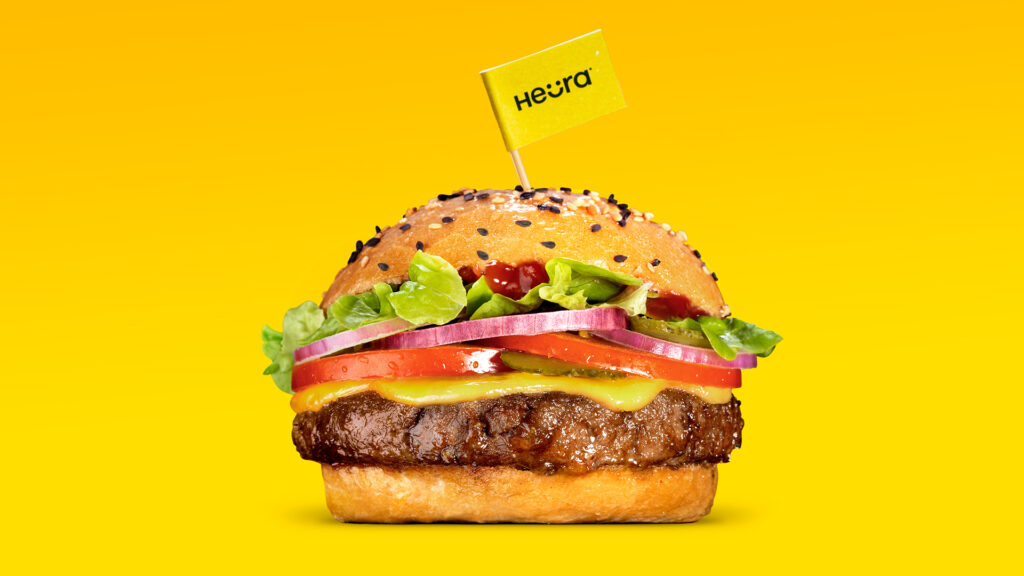
The court also ruled on labelling terminology, finding that terms such as “burger,” “sausage,” and “chorizo” can legitimately be applied to plant-based products provided their plant-based nature is communicated clearly, and dismissed the argument that the use of animal pictograms misleads consumers.
“This ruling is particularly significant because it not only validates Heura’s messages as being grounded in scientific evidence but also warns that broadly censoring them would have amounted to an unacceptable restriction on freedom of expression,” said Gemma Gaya, partner at Redi Abogados, the law firm that represented Heura.
Beyond the courtroom
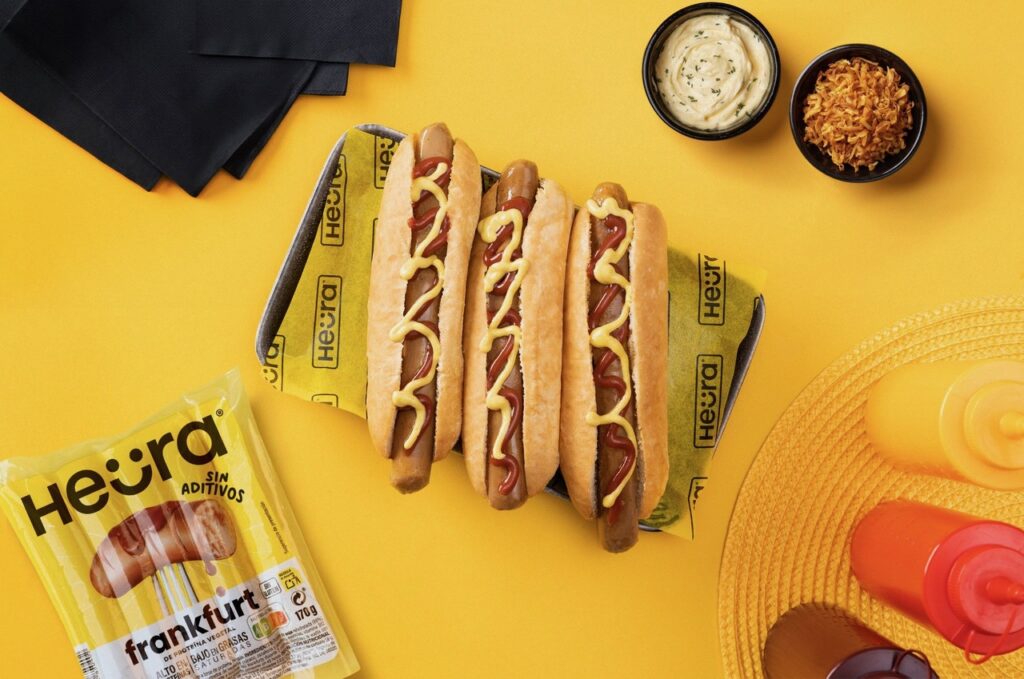
Heura, founded in 2017 by Marc Coloma and Bernat Añaños, has a history of legal confrontations with Spain’s conventional meat sector over its environmental communications. The company has previously reached profitability and recently shared its plant-based frankfurter recipe with major Spanish meat producers.
In response to the ruling, Heura pointed to research by Systemiq, supported by GFI Europe, projecting that moderate policy support and investment in alternative proteins could add up to €10 billion annually in gross value added and 34,000 jobs in Spain by 2040, with equivalent EU-wide figures of €111 billion and 414,000 jobs.
“There was an attempt to silence a conversation this country needs, and the courts have protected the right to have it. This ruling goes far beyond Heura: the entire agri-food sector wins with it. Limiting the tools to innovate and communicate doesn’t protect the food sector — it weakens it. When we stop new solutions from reaching the market, we all lose: consumers, companies, farmers, industry, and the chance for Europe to lead the future of food,” said Marc Coloma, CEO and co-founder of Heura.