
Tufts University spinout Deco Labs has developed a plant-derived replacement for albumin, the most expensive component of culture media used in the production of cultivated meat.
The most expensive parts of manufacturing cultivated meat are the components derived from animals themselves. For one startup, the solution lies in the oil industry – specifically, the byproduct from canola oil production.
Traditionally, canola (or rapeseed) meal is destined for livestock feed. Deco Labs, a startup spun out of Tufts University in 2024, is upcycling the ingredient into a plant-based protein isolate that can dramatically reduce the cost of cultivated meat.
Culture media are essential for the production of cultivated meat, providing a nutrient mix that supports the growth of animal cells. However, they account for the majority of the costs in the entire process.
The single most expensive media ingredient is albumin, the most abundant protein in animal serum. It aids the transport of ligands such as fatty acids and water and promotes viability, growth, and differentiation.
According to the Good Food Institute (GFI), the cultivated meat industry might require up to 10,000 tonnes of albumin by 2030, volumes that don’t currently exist in the market.
“There’s a huge need for an albumin solution that is 100% animal-free, enables price parity, is highly effective, and abundantly available,” says Natalie Rubio, co-founder and CEO of Deco Labs.
Enter cAlbumin, the firm’s rapeseed-meal-derived drop-in replacement for both bovine serum albumin and recombinant versions. “cAlbumin is a functional plant protein isolate that outperforms today’s albumin solutions in serum-free media,” she notes.
Plant-derived albumin costs $0.02 per litre of cell culture media
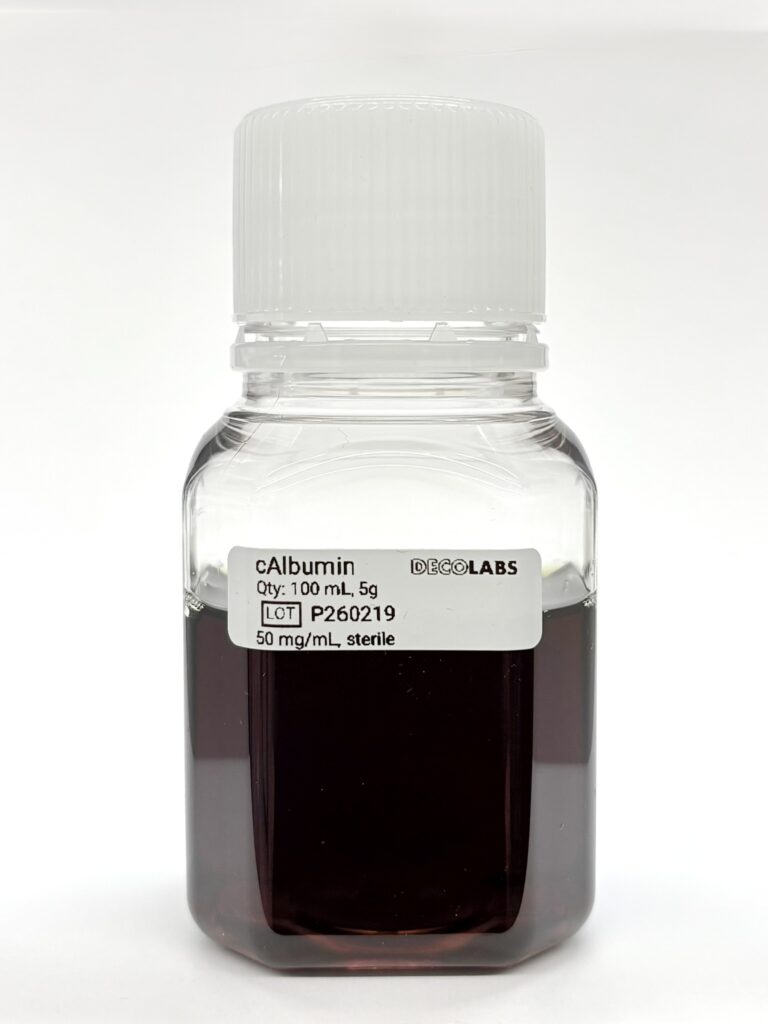
Alongside transferrin, another key protein, conventional albumin contributes nearly $100 per kg to the total production cost of cultivated meat. Deco Labs’s plant-derived alternative outperforms albumin, promoting faster cell growth at a fraction of the price.
“cAlbumin both costs less than albumin and is effective at a much lower concentration; compounding cost reduction. At scale, cAlbumin will contribute [around] $0.02 per litre to our customers’ media costs,” says Rubio.
“When cells are grown with serum (i.e., fetal bovine serum), the albumin is supplied within the serum. In serum-free media, albumin is added as an individual ingredient, either purified from animal blood (for example, bovine serum albumin) or as a recombinant protein,” she explains.
“Today, serum-free media uses bovine serum albumin (which is expensive, is infamous for lot-to-lot variability, and animal-derived), recombinant human albumin (which is more expensive, doesn’t perform as well as animal-derived albumin, and the human protein sequence presents a regulatory challenge), or recombinant bovine albumin (which is even more expensive).
“Some companies have adapted their cells to grow without albumin, but they don’t grow nearly as well, especially in large-scale systems.”
To develop its rapeseed-meal-derived alternative, Deco Labs screened various plant proteins for their ability to promote cell proliferation and optimised an extraction process that maintains efficacy, consistency, solubility, and stability.
“We have validated cAlbumin across over a dozen different cell types and have seen it consistently outperform albumin (both recombinant albumin and bovine serum albumin),” says Rubio.
“After testing multiple prototypes of the formulation, we’ve optimised a product that promotes fast cell proliferation across multiple passages, with consistent performance between lots. We know that cultivated companies really value batch consistency, so we validate every batch of cAlbumin for stable growth for 10+ cell doublings before shipping it out.”
Deco Labs advancing multiple innovations amid fundraising efforts
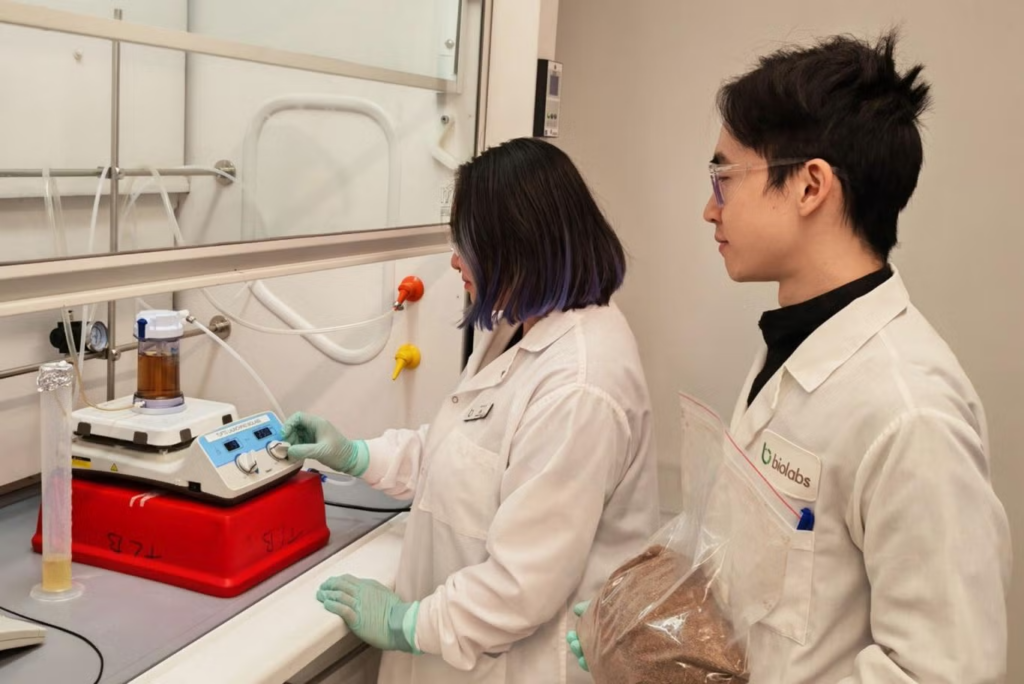
The innovation has been tested across various cell lines, including beef, pork, chicken, mackerel and mouse. “We are working with dozens of cultivated (meat, seafood, leather, collagen) companies and researchers, as well as companies across biotechnology segments – like cell therapy, human stem cell culture, regenerative medicine, vaccine manufacturing, and others,” she reveals.
The startup is working on additional ingredients. cAminos is an amino acid supplement made from plant hydrolysates, which can replace synthetic amino acids in basal culture media. “Our current formulation can displace [around] 15% of basal media volume, and our next iteration should replace the vast majority of amino acids,” notes Rubio.
Meanwhile, pFactor1 is a bioactive plant compound formulation designed to fully replace fibroblast growth factor 2 (FGF-2), a commercial protein that signals mammalian cells to proliferate. “For our internal cell line (bovine mesenchymal stem cells), our current formulation exhibits 111% of the performance of FGF-2,” she says.
“We are always advancing other innovations in the background, one of which is end-to-end cell culture experiment automation – fueled by an AI agent named Pascal (for which our CTO, John, and his team won the AIxBio hackathon at Boston TechWeek) and our automated wet lab.”
Deco Labs is funded by its university partner and a number of grants, including a research grant from GFI and a financial award for winning Supply Change Capital’s Women in Ag & FoodTech pitch competition.
“We are currently raising our seed round, led by Replicator VC. The round will fund our pilot scale-up and our GRAS filing for cAlbumin,” Rubio says.
“By replacing synthetic cell culture media ingredients with natural plant compounds, we can step towards making cell culture media ‘clean label’ and enabling our customers to achieve (and exceed) price parity with reliable and scalable supply chains.”