
Silica Nanoparticles Induce Ferroptosis, Reprogram Immunity in Prostate Cancer Models
Ultrasmall fluorescent core‑shell silica nanoparticles—best known for their roles in medical imaging applications—are now showing surprising therapeutic muscle. Originally engineered as inert carriers for imaging agents, these particles, called Cornell Prime dots (C’ dots), have steadily expanded their résumé. In a new preclinical study, researchers at Weill Cornell Medicine report that these engineered silica nanoparticles can directly kill prostate tumor cells while reawakening antitumor immunity, offering a potential new edge in a disease where immunotherapy has historically struggled.
Prostate cancer remains one of the most immunologically “cold” solid tumors, with myeloid‑driven immune suppression, metabolic bottlenecks, and stromal remodeling that blunt the effects of checkpoint blockade. The new work suggests that C’ dots—when targeted to prostate‑specific membrane antigen (PSMA)—can break through these layers of resistance by triggering ferroptosis, remodeling the tumor microenvironment, and priming tumors for combination immunotherapy.
“We’re very encouraged by these results; a treatment that directly induces tumor‑cell death while transforming the immune microenvironment, as this does, would represent a new clinical paradigm,” said senior author Michelle Bradbury, MD, PhD, the endowed professor of imaging research in radiology and director of the Molecular Imaging Innovations Institute at Weill Cornell Medicine and a neuroradiologist at NewYork-Presbyterian/Weill Cornell Medical Center.
The study, published in Cancer Research and titled “Reprogramming of TLR–Ferroptosis Signaling and Immunometabolic Pathways Overcomes Myeloid Suppression to Improve Checkpoint Blockade in Prostate Cancer,” shows that the silica particles accumulate in prostate tumors and push cancer cells toward ferroptosis, a form of iron‑dependent cell death driven by runaway lipid peroxidation. Although the particles were originally designed for imaging, the team found that they often pick up positively charged iron ions in the bloodstream and shuttle them into tumor cells—effectively turning the particles into catalytic seeds for oxidative collapse.
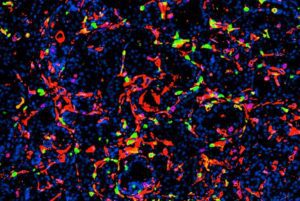
At the same time, the nanoparticles reshape the immune landscape. T cells, macrophages, and other immune populations shift from inert or suppressive states into robust antitumor activity, converting cold tumors into hot ones. “One of the most intriguing aspects of this work is the convergence of direct tumor cell killing with broad immune remodeling,” said co‑author Jedd Wolchok, MD, PhD, the Meyer director of the Sandra and Edward Meyer Cancer Center, professor of medicine at Weill Cornell Medicine, director of the Parker Institute for Cancer Immunotherapy at Weill Cornell Medicine Meyer Cancer Center, and an oncologist at NewYork-Presbyterian/Weill Cornell Medical Center.
The therapeutic impact was most striking in survival experiments. C’ dots alone modestly extended survival in aggressive mouse models, as did checkpoint blockade alone. But the combination produced complete or near‑complete remissions in 40% of mice. Adding CSF‑1R blockade increased complete remissions to 50%.
The researchers’ next steps include continuing to explore these ultrasmall core-shell silica particles, setting the stage for the platform’s translational potential.
“By creating conditions that support a more effective antitumor immune response, these particles may help unlock the full potential of immunotherapy in prostate cancer, where durable responses have historically been difficult to achieve,” added Wolchok.