Italian coffee giant Lavazza has brought Tablì, its 100% coffee tabs that ditch plastic, wrappings and coatings altogether, to the US market.
One of the world’s largest coffee companies has introduced the “most ambitious product innovation” in its 131-year history.
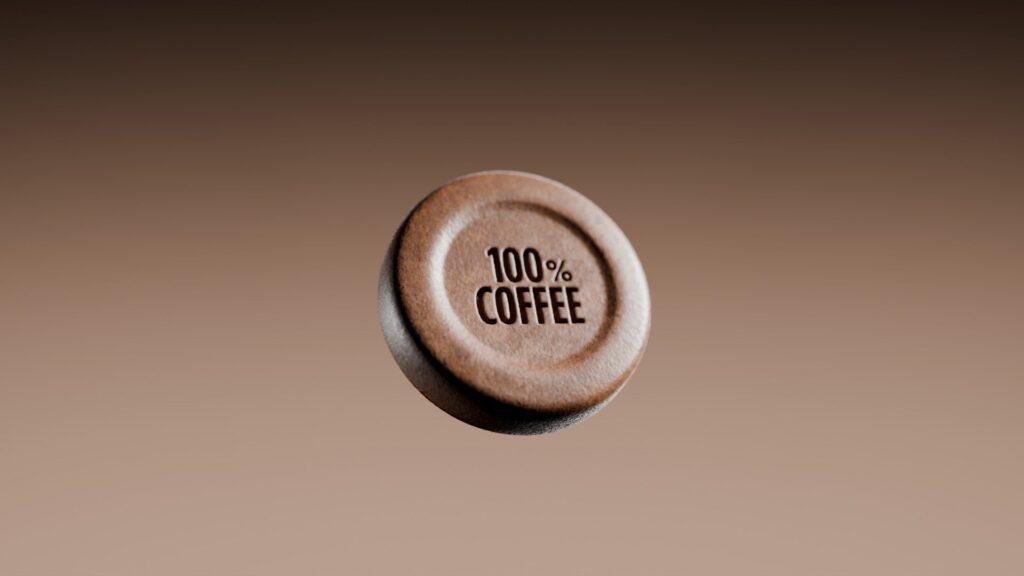
Turin-based Lavazza has introduced Tablì in the US. It’s a next-generation at-home coffee “tab” that eschews the coatings and wrappers needed for conventional pods or capsules.
First introduced in Italy with a dedicated Tablì machine, the tabs are made entirely of ground coffee, and will be available from August in five blends: Super Crema, Espresso, Double Espresso, Lungo, and Decaf.
The single-serve solution targets the vast amounts of waste and environmental harm caused by conventional coffee pods, which are made from plastic and aluminium.
Lavazza seeks to strengthen its US presence with Tablì coffee tabs
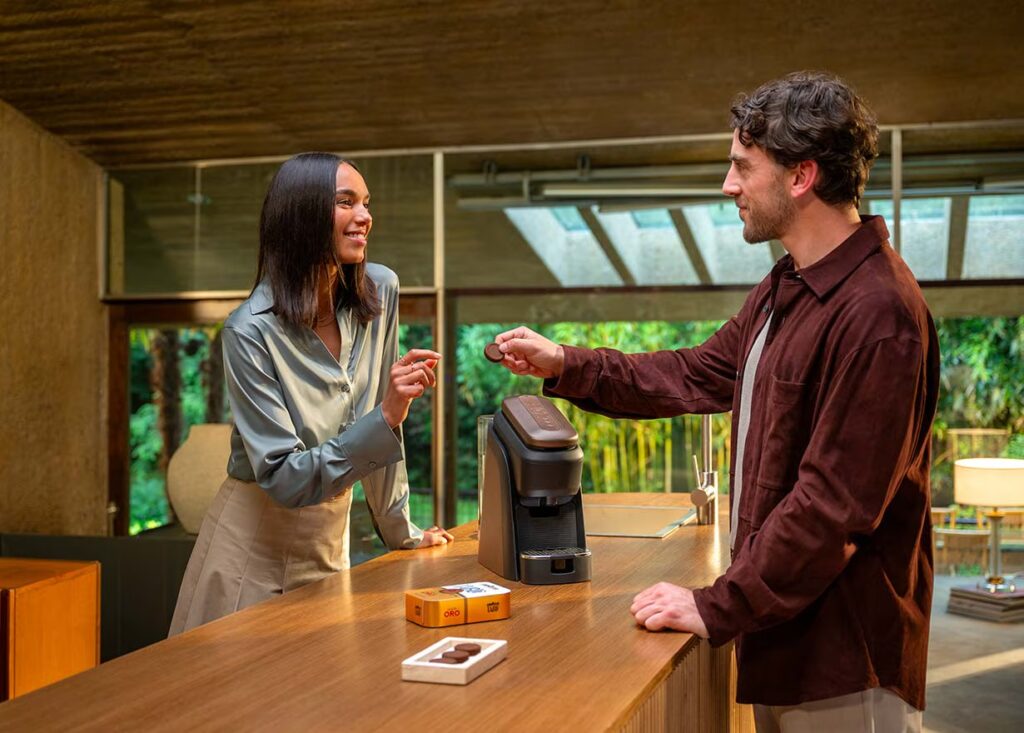
The Tablì coffee system was born out of Lavazza’s 2020 acquisition of Italian startup Caffemotive. which marked the start of an innovation process that transformed the original idea with 15 new patents.
Over the next five years, the team created a complete machine and tab system, with new technology to manufacture the tabs and an industrial-scale project to guarantee consistency in quality.
The proprietary tech compresses precisely dosed, ground and tamped coffee into a ready-to-brew puck, without requiring any measuring or setup.
The concave shape of the Tablì tabs allows the coffee to expand as it brews, producing what Lavazza has termed Crema Plus, the deep-golden, velvety layer of foam atop an espresso.
The accompanying espresso machine was designed in Italy with a sculpted silhouette and a bean-shaped slider for intuitive, one-touch use.
“Tablì eliminates the trade-off between quality and convenience entirely – it’s a true multisensory experience: coffee you can smell, feel, and see before it ever brews,” said Daniele Foti, VP of marketing at Lavazza North America.
More than just a product innovation, the tabs are being positioned to establish Lavazza as a brand that “genuinely matters to American coffee drinkers”, she noted.
“The US is one of the most dynamic markets in the world, and the momentum we’ve built here across our different segments is exactly why we’re bringing Tablì here as the first market outside Italy. This is our biggest bet on this market yet, and we intend to shape what comes next.”
Why coffee pods need an overhaul
Coffee pods are an environmental nightmare. Research suggests they contribute to more planet-heating emissions than other brewing methods.
One study also identified them as among the worst forms of human waste for the climate in terms of long-term damage, because even though many of them are recyclable, the majority end up in landfill.
These capsules are responsible for 576,000 metric tons of waste produced every year. Take Nestlé, for example. The Swiss giant’s coffee arm, Nespresso, has spent over 185 million francs ($232.5M) since 2014 to develop recycling solutions for its coffee pods, but its actual rate of recycling stands at 30% globally.
On average, packaging makes up around 30% of individual coffee capsules, and most of it comes from plastic or aluminium. Plastic production accounts for 3.4% of global emissions, a share set to increase as production triples by 2060. The material takes 20 to 500 years to break down, and less than 10% of it is recycled globally – the rest goes to landfill, where it leaks microplastics into the soil and water supply.
The single-use nature of pods makes waste a common result of coffee brewing at home. It’s why coffee companies have been scrambling for alternatives. In 2024, Keurig unveiled K-Rounds, a line of fully compostable coffee capsules coated with cellulose.
But Lavazza seems to have beaten Keurig to the punch, as the latter’s innovation has still not been commercialised. Nespresso, meanwhile, introduced paper-based coffee pods that are home-compostable in 2022.
According to Lavazza, single-serve is one of the fastest-growing segments in the global coffee sector, and Tablì can open up a new space within it, with users able to compost the tabs just like they would standard coffee grounds. The tabs, it said, are its biggest investment in the US to date, and form the centrepiece of its accelerated growth strategy in this market.