
US company Bond Pet Foods has obtained a ‘no questions’ letter from the FDA, enabling it to sell the precision-fermented lamb protein it developed with Hill’s Pet Nutrition for use in dog food.
Five years after they first joined forces, Bond Pet Foods and Hill’s Pet Nutrition can now bring their precision-fermented protein to the US market.
Bond has secured a Letter of No Objection from the US Food and Drug Administration’s (FDA) Center for Veterinary Medicine (CVM) for its Lamb Protein Yeast ingredient.
Developed in collaboration Hill’s, a subsidiary of Colgate-Palmolive, the precision-fermented protein has completed the FDA’s Generally Recognized as Safe (GRAS) notice process for healthy adult dogs, supporting its use at inclusion rates of up to 15% in finished products.
The “brewed lamb protein” underwent a six-month longitudinal feeding study in dogs to achieve the feat. The two companies have also completed a feeding trial in cats and are preparing to submit additional information to the CVM, which oversees novel pet food regulation in the country, for feline use.
“This milestone reflects collaborative research, feeding studies, regulatory work and persistence from an incredible group of people across Bond, Hill’s and beyond,” Bond founder and CEO Rich Kelleman said in a LinkedIn post.
Bond Pet Foods & Hill’s Pet Nutrition reach commercial-scale for lamb protein
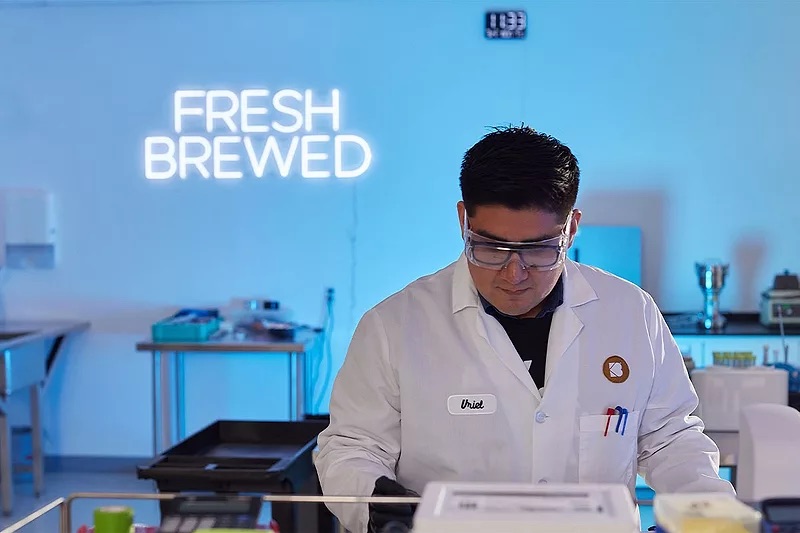
Precision fermentation involves inserting a specific molecular sequence into microbes to teach them to produce the desired molecules when fermented. It’s a process often described as similar to beer brewing.
Bond leverages this tech to produce a range of recombinant meat proteins for pet food applications, including chicken, turkey, and beef. With Hill’s, the focus has been on developing a yeast-derived protein with comparable nutritional characteristics to lamb, including a complete amino acid profile.
The companies use brewers’ yeast, a rich source of protein, complex B vitamins, amino acids and minerals, to express lamb protein via precision fermentation. The microbes are fed on a nutrient solution mainly comprised of dextrose, with air continuously added during the fermentation process.
The fermentation is completed when the entire feeding solution is added and the concentration of biomass reaches ideal conditions. The whole-cell biomass is then separated from the fermentation broth via centrifugation and heat treatment, before being spray-dried to produce a dehydrated, inactive ingredient with at least with 50% protein, over 10% of which is lamb protein.
Bond has reached commercial-scale production at a 45,000-litre scale for its brewed lamb protein, and has so far delivered more than 25 tonnes of the fermentation-derived ingredient to Hill’s facilities for formulation, testing, and regulatory evaluation.
“Lamb Protein Yeast expands the range of science-backed nutritional options we can deliver, supporting our sustainability objectives while maintaining the rigorous nutritional standards for which Hill’s is known,” said Dave Baloga, executive VP of science and tech at Hill’s.
The companies are now in the final stages of formulation and testing, as they prepare to commercialise the yeast-derived protein in the US market.
A big year for low-carbon pet food
The feeding trial lasted 26 weeks and involved 40 dogs (divided into four groups), and different health measures – including body weight, food intake, blood biomarkers, and urinary parameters – showed “few or no differences among groups”.
“Levels of serum chloride, cholesterol, homocysteine, and whole blood taurine were lower in dogs fed the foods with the test ingredient compared to the dogs fed the control food, but all were within reference ranges. Digestibility was similar among all study foods, except that fat digestibility was lower in foods with the test ingredient,” the study found.
“The results of our six-month feeding study, together with the FDA’s Letter of No Objection, demonstrate the safety and nutritional performance of our brewed proteins and bring us a significant step closer to delivering a reliable source of high-quality protein for pets,” said Kelleman.
Bond and Hill’s began working together in 2021 with the aim of developing an alternative approach to meet pets’ dietary needs. Meat-free pet food is deemed the most effective measure to tackle the climate footprint of dogs and cats, even when accounting for the fact that most conventional pet food uses animal byproducts.
The regulatory breakthrough comes a month after Bond bagged an investment from German flavour and chemicals giant Symrise, with whom it will create new precision-fermented products for pet nutrition to a broad set of clients.
Climate-friendly pet food has been heating up this year. This month alone, Enifer and Rovio Pet Foods launched a semi-moist dog treat made with the former’s Pekilo mycoprotein ingredient, and MicroHarvest announced it would co-launch 15 new pet food products with its mycelium protein in Q2 2026.
Meanwhile, UK startup Meatly raised £10M ($14.1M) to build Europe’s largest cultivated meat facility and start delivering pet food products next year (following its debut in 2025). And in Singapore, Friends & Family Pet Food launched eight cultivated meat products targeting different functionalities for pets, with another four set to be rolled out this month.